
Reviewed and Updated: 4 July,2026
Incorrect weights can slow down receiving, cause stock differences, create packing errors, and lead to disputes over freight or product quantities. A warehouse may dispatch a pallet with the wrong recorded weight, while a production team may use too much raw material in a batch without noticing the loss. The right weighing equipment gives manufacturing and logistics companies clear, dependable information at each stage of the operation. From incoming goods and small parts to pallets, vehicles, and suspended loads, the correct industrial scale improves accuracy, supports better stock control, and helps teams work faster with fewer avoidable errors.
The best weighing solution depends on what you need to weigh, how the load moves through your facility, the capacity and accuracy required, and whether the weight is used for internal control or commercial trade. Platform scales, pallet scales, bench scales, counting scales, axle weighers, crane scales, load cells, and connected indicators all serve different manufacturing and logistics needs.
Why Manufacturing and Logistics Companies Need the Right Weighing Solution
Weight data affects far more than a number on a display. It can influence incoming stock records, material usage, packing quality, dispatch documents, freight charges, customer invoices, and load safety. A scale that does not fit the job can create unnecessary handling steps, force workers to estimate quantities, or produce readings that are too broad for the decision being made. Choosing equipment based on the application helps a business move goods with more control from the receiving bay to final dispatch.
Improve Operational Flow From Receiving to Dispatch
A well-placed industrial scale removes delays from daily handling. Incoming pallets can be checked before they are entered into stock, production materials can be weighed before use, and finished goods can be confirmed before collection. This gives supervisors a clearer picture of what has arrived, what has been consumed, and what has left the site. Floor scales, pallet solutions, indicators, and digital data capture can reduce the need for handwritten weight records, especially in busy warehouses and production areas where several people handle the same goods during a shift.
Reduce Material Loss, Product Give-Away and Stock Errors
Small weight differences can become expensive when repeated across a high volume of products or shipments. In manufacturing, an overfilled pack or incorrect ingredient weight can waste materials and reduce margins. In logistics, a wrong pallet weight can create stock differences, billing issues, or shipment disputes. Counting scales also help prevent short-packed or over-packed boxes of components. Accurate weighing gives businesses stronger cost control because it replaces guesswork with measurable quantities.
Make Weight Data Useful for Daily Decisions
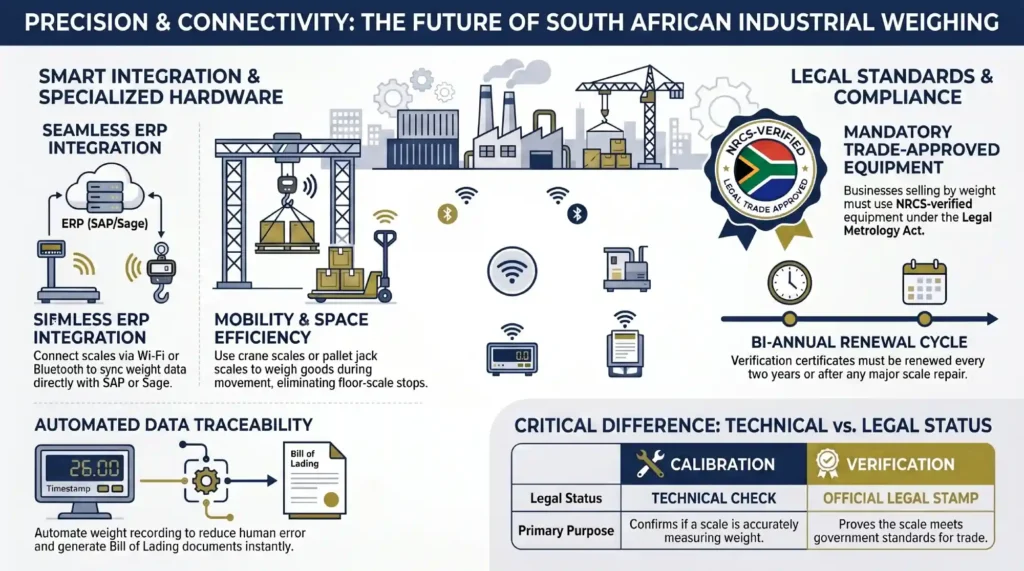
A scale becomes more useful when the weight can be recorded, printed, or transferred into a business system. Warehouse and production teams can use weight data for stock updates, batch records, packing checks, dispatch paperwork, and internal reporting. Scales4U highlights connected weighing systems that can reduce manual data entry and support inventory records through digital indicators and software connectivity.
Start With the Application: What Are You Trying to Weigh?
Before comparing scale models, first define the actual job. The best solution for a pallet warehouse is very different from the best solution for a packing bench or a steel fabrication yard. A good selection process considers the item being weighed, maximum load, required resolution, frequency of use, available floor space, environmental conditions, and whether workers load the scale by hand, pallet jack, forklift, crane, or vehicle.
Pallets, Drums and Bulk Materials
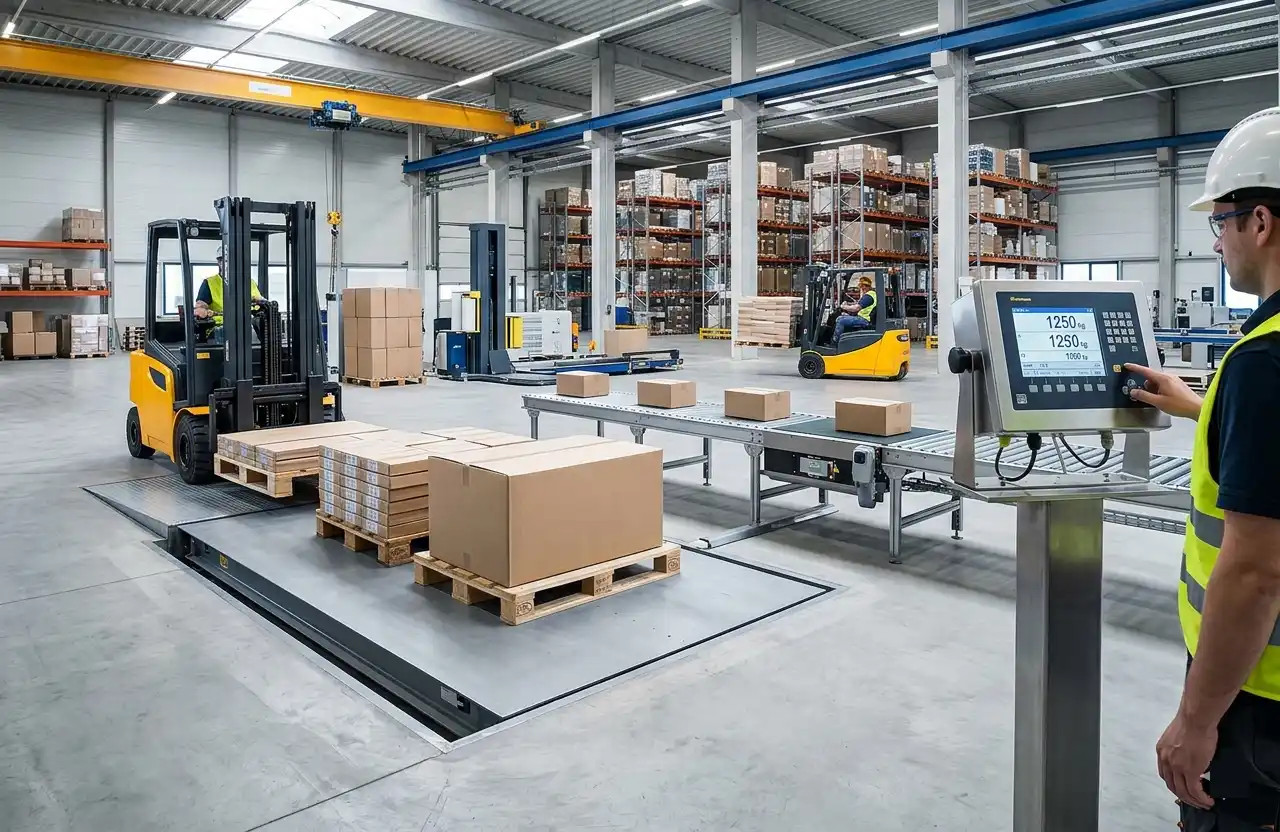
Pallets, drums, bulk bags, large crates, and industrial containers usually need a low-profile floor solution with enough capacity and platform area for safe loading. These loads are often moved by pallet jack or forklift, so the scale must fit into the handling flow instead of creating another bottleneck. Platform and floor scales are commonly used for receiving, stock checks, dispatch confirmation, and bulk material control because they can handle heavy loads without requiring staff to lift items manually.
Small Parts, Components and Packaged Goods
Small components need a scale with more resolution than a large floor platform can provide. Fasteners, fittings, electrical parts, food portions, parcels, and packaged products are often weighed at a workstation where staff need fast, repeatable results. Bench and counting scales work well here because they help verify the quantity or weight of smaller items before packing, assembly, or dispatch.
Trucks, Fleet Loads and Vehicle Axles
Vehicle weighing is important for operations moving bulk goods, freight, equipment, or large palletised loads. A total vehicle weight may look acceptable while one axle carries too much of the load. Axle weighing systems help check how weight is distributed across a vehicle, which can support safer loading decisions before transport. We note that axle weighers are useful for checking load distribution at warehouse bays and transport sites.
Suspended Loads, Steelwork and Overhead Handling
Some loads cannot be placed safely on a floor scale because they are oversized, awkwardly shaped, or already lifted by overhead equipment. Steel fabrication, scrap handling, lifting operations, and certain warehouse applications may need a crane scale or hanging scale. These systems measure the load while it is suspended, helping operators confirm weight without taking up extra floor space.
Best Weighing Solutions for Warehouses and Logistics Operations
Warehouse weighing equipment should match the speed and movement of goods through the site. The goal is to avoid unnecessary lifting, reduce waiting time at a weighing point, and create reliable records for stock and dispatch. The best setup may include more than one scale type because receiving, storage, packing, and vehicle loading often have different requirements.
Platform and Floor Scales for Pallets and Heavy Loads
Platform and floor scales are a strong choice for pallets, drums, crates, bulk bags, and larger containers. They sit at floor level or close to it, allowing loads to be placed using a pallet jack or forklift. A low-profile design can make loading faster and safer, while a remote indicator protects the display from impact and gives workers a clear view of the reading. Platform pallet scales can support heavy warehouse loads and off-centre pallets, describing models for industrial use in the 1,000 kg to 3,000 kg range.
Best for: Receiving bays, warehouse dispatch, pallet stock checks, large crates, drums, bulk goods, and industrial containers.
Pallet Jack Scales for Weighing While Moving Goods
Pallet jack scales combine pallet movement and weighing in one process. Instead of taking every pallet to a fixed platform scale, staff can weigh goods during transport. This can save time in busy distribution centres, especially where space is limited or pallets move quickly between receiving, storage, and dispatch areas. Pallet jack scales are useful for checking incoming goods, confirming shipment weights, and identifying stock differences before a pallet reaches the next stage.
Axle Weighers for Vehicle Load Distribution
Axle weighers are useful for logistics companies that need a fast way to check axle loads and vehicle balance. They can help operators identify whether freight is distributed unevenly, even where the total vehicle weight appears acceptable. This is important for fleet safety, load planning, tyre wear, and transport decisions. Companies moving heavy materials, agricultural products, construction supplies, or large warehouse consignments can benefit from adding axle checks to their loading process.
Weighing Indicators and Data Capture for Dispatch Control
A weighing indicator is the part of the system that displays the result, but modern units can also support printing, data transfer, and connection to warehouse or inventory systems. Depending on the model and site setup, indicators may support USB, RS-232, or wireless connectivity. This allows weight data to move from the scale into a dispatch record, label printer, stock system, or internal report. Scales4U explains that digital indicators can support links between weighing equipment and inventory management processes.
Best Weighing Solutions for Manufacturing Operations
Manufacturing sites often need different scales at different stages of production. A large platform scale may be suitable for raw materials, while a bench scale may be better for packing checks, and a counting scale may help control component quantities. The correct combination helps teams maintain product consistency without slowing down production.
Bench Scales for Assembly, Packaging and Quality Checks
Bench scales are suited to smaller items that can be placed on a table or workstation. They are useful for parcel weighing, food portions, component checks, packaging stations, ingredient measurement, and finished-product inspection. Their higher resolution makes them a better fit for smaller loads where a few grams can matter. We describe bench scales as suitable for loads from around 1 kg to 150 kg, while platform scales are intended for heavier floor-based loads.
Counting Scales for Parts Control and Inventory Accuracy
Counting scales help manufacturers confirm the number of items in a container by using the average piece weight of a sample. This is useful for bolts, screws, fittings, electrical parts, plastic components, and other repetitive items that take too long to count by hand. A counting scale can help a manufacturer confirm that every box contains the required number of parts before it is sent to a customer or moved into assembly stock. For accurate counting, the scale must have enough resolution to detect the weight of each individual item.
Check Weighers for Product Weight Consistency
Check weighers help staff confirm whether a product falls within an acceptable weight range before it leaves the production line or packing area. They can identify packs that are underweight, overweight, or inconsistent with the target quantity. This is useful for food packaging, ingredients, retail-ready products, hardware kits, and other goods where product quantity affects customer value and business margins. A check-weighing process can reduce product give-away while also helping prevent underfilled products from reaching the customer.
Load Cells and Custom Weighing Systems for Process Control
Load cells are the sensors that convert force into a weight signal. They are used in many industrial applications, including platform scales, hopper systems, crane scales, tank weighing, and production equipment. The correct load cell depends on the load capacity, mounting arrangement, operating environment, and required level of accuracy. Scales4U supplies load cells for commercial and industrial weighing applications and also provides calibration and verification support for these systems.
When Do You Need a Crane Scale or Hanging Scale?
Crane and hanging scales are suitable where a load must be measured while suspended. They are often used in steel fabrication, engineering workshops, scrapyards, warehouses with overhead lifting equipment, and sites where large items cannot be placed on a floor platform. The key selection factors include safe working load, hook and shackle condition, display visibility, required accuracy, operator access, and the handling procedures already used on site. A suspended-load scale must support safe lifting practices and should be inspected regularly as part of the equipment maintenance plan.
How to Choose the Right Industrial Scale
The right industrial scale is not always the highest-capacity or most advanced model. It is the one that fits the load, the handling method, the work environment, and the business decision supported by the weight. A simple review of these factors before purchase can prevent damaged sensors, slow processes, and inaccurate records.
Match Capacity and Platform Size to the Actual Load
Choose a scale with enough capacity for the heaviest normal load, including pallets, containers, or packaging where relevant. Avoid operating close to the maximum capacity every day because frequent overloading can damage the sensing components. Platform dimensions matter as well. A pallet should sit safely on the platform without excessive overhang, and the loading method should be considered before installation. If a pallet jack will be used, a low-profile platform with a ramp or a pit-mounted option may be more practical than a raised scale.
Choose the Right Accuracy and Readability
Accuracy describes how close a reading is to the true weight, while readability refers to the smallest change that the display can show. A warehouse platform scale may be suitable for a one-ton pallet while being unsuitable for a 2 kg ingredient check. Bench scales usually provide finer readings for smaller items, while platform scales provide the strength and capacity needed for bulk loads.
Consider the Working Environment
The work environment affects both scale selection and equipment life. Dry warehouses may be suitable for powder-coated mild steel equipment, while wet, dusty, corrosive, or washdown areas may need stronger protection, stainless steel surfaces, sealed components, or a more suitable load-cell arrangement. Temperature changes, vibration, debris under a platform, and repeated shock loading can also affect performance. A site review before purchase can help identify these risks early.
Decide Whether You Need Data Integration
Manual records may be enough for a low-volume operation, but busy facilities often benefit from digital weight capture. A scale that connects to a printer, barcode system, computer, or inventory platform can reduce repeated data entry and make records easier to trace. This is useful for batch records, goods receiving, dispatch paperwork, stock movements, and customer reporting. The best level of integration depends on the number of weighments, the software already in use, and how much time staff currently spend entering information manually.
Plan for Calibration, Maintenance and Repairs Before Purchase
A scale is a working asset that needs support throughout its service life. Before buying equipment, ask how it will be calibrated, how quickly faults can be assessed, whether replacement load cells or indicators are available, and whether trade verification is required for the intended use. Scales4U offers calibration, maintenance and repair, verification, load-cell support, and service options for industrial weighing equipment.
Trade Approval, Calibration and Verification in South Africa
South African businesses should separate internal operational weighing from weighing used for trade. The requirements can differ depending on whether the measurement affects a selling price, invoice quantity, or another prescribed purpose. The Legal Metrology Act applies to measurements in trade and measuring instruments used for prescribed purposes, with consumer protection against inaccurate measurement among its stated objectives.
When Does a Scale Need to Be Trade-Approved?
A scale may need to be trade-approved and legally verified where the weight is used to determine what a customer pays, what a supplier is paid, or the quantity recorded in a commercial transaction. Examples can include product sales by weight, freight charges based on weight, commercial packing, and wholesale produce transactions. Businesses should confirm the intended use of a scale before purchase so that the correct equipment and compliance process are selected.
Calibration vs Legal Verification
Calibration and verification are related, but they do different jobs. Calibration checks how accurately a scale performs against known reference weights. Legal verification confirms that a measuring instrument meets the required conditions for prescribed trade use. A repair or adjustment may be needed when a scale does not perform within the required tolerance.
| Service | Purpose | Typical Need |
| Calibration | Checks measurement accuracy against known standards | Quality control, internal checks, maintenance planning |
| Legal verification | Confirms suitability for prescribed trade use | Selling, billing, or trading by weight |
| Repair or adjustment | Restores equipment performance | Damage, drift, unstable readings, failed checks |
South Africa’s regulations include verification and technical requirements for certain weighing instruments used for prescribed purposes, including non-automatic weighing instruments covered by SANS 1649.
Keep Documentation Ready for Audits and Inspections
Good documentation helps businesses prove that their equipment has been maintained and checked. Keep calibration reports, verification certificates where applicable, service records, asset numbers, repair history, and next due dates in one accessible place. These records can support internal audits, supplier requirements, quality procedures, and investigations into repeated scale problems. They also make it easier to plan service work before equipment failure disrupts operations.
Keep Industrial Weighing Equipment Reliable After Installation
The life of a scale depends on how it is used and maintained after installation. Heavy industrial equipment can last for years when it is kept clean, protected from overloads, and checked before small faults become major problems. Operators should understand the basic daily checks, while professional technicians should handle formal calibration, repairs, load-cell work, and verification requirements.
Daily Checks That Operators Can Perform
Staff can complete simple checks before using a scale. Confirm that the display returns to zero, inspect the platform for damage or debris, keep cables clear of vehicle traffic, and avoid dropping loads onto the scale. For platform scales, make sure the area under and around the platform is free from stones, packaging, dust buildup, or other obstructions that can affect movement. For bench scales, confirm that the unit is stable on a level surface and is not being used beyond its capacity.
A simple operator checklist includes:
- Check that the display returns to zero before use
- Inspect cables, platform surfaces, hooks, and visible parts
- Keep the weighing area clean and level
- Avoid shock loading and overloading
- Report unstable readings or repeated error messages
- Do not use damaged equipment for important weight decisions
Signs You Need Professional Support
Inconsistent readings, slow stabilisation, a display that does not return to zero, visible corrosion, damaged cables, frequent overload errors, or problems after relocation all require attention. A scale may still produce a reading while being inaccurate, so do not assume that equipment is functioning correctly simply because it powers on. Scales4U identifies inconsistent readings, unstable displays, corrosion, slow response, and regular error codes as warning signs that industrial weighing equipment needs professional support.
Why a Service-Level Agreement Makes Sense for High-Use Sites
High-use warehouses and production sites benefit from planned support because unexpected scale failure can delay receiving, packing, production, and dispatch. A service-level agreement can help schedule inspections, calibrations, maintenance visits, and fault reporting based on the working conditions of the equipment. This is useful for businesses that depend on multiple scales across one site or operate equipment in harsh conditions where wear, vibration, moisture, or heavy loading are common.
Frequently Asked Questions
What is the best scale for a warehouse in South Africa?
A platform or floor scale is often the best choice for palletised goods, drums, bulk containers, and heavy warehouse loads. A pallet jack scale may be better where staff need to weigh pallets while moving them between receiving, storage, and dispatch areas.
What is the difference between a platform scale and a pallet jack scale?
A platform scale is a fixed weighing point where a pallet or heavy item is placed on a floor platform. A pallet jack scale is built into a pallet-moving system, allowing workers to weigh goods while transporting them. The better choice depends on how quickly goods move and whether a dedicated weighing station is practical.
Which scale is best for counting small manufacturing parts?
A counting scale is best for repetitive items such as bolts, screws, fittings, clips, electronic parts, and small components. It uses an average piece weight to calculate the quantity of a batch and can reduce manual counting errors.
Do logistics companies need axle weighers?
Axle weighers are useful for logistics companies that need to check how freight is distributed across a vehicle. They can support safer loading decisions and help identify uneven axle loads before a vehicle leaves the site.
Can an industrial scale connect to inventory software?
Many industrial weighing indicators can support data transfer through options such as USB, RS-232, printer connections, or wireless links. The exact integration depends on the scale, indicator, software, and operational needs of the site.
How often should industrial weighing equipment be calibrated?
Calibration frequency depends on use, environment, required accuracy, product value, manufacturer guidance, quality procedures, and whether the scale is used for trade. High-use, high-risk, or precision applications may need more frequent attention than low-use internal equipment.
What should I do if my scale gives inconsistent readings?
Stop using the scale for important weight decisions until the issue is assessed. Check for obvious debris, uneven surfaces, damage, or overloads, then arrange professional inspection, calibration, or repair if the problem continues.
Get the Right Weighing Solution for Your Operation
The best industrial weighing setup matches your real workflow. A busy warehouse may need platform and pallet solutions for receiving and dispatch, while a manufacturer may need bench scales, counting scales, check weighers, and load-cell systems at different stages of production. Selecting the right equipment helps improve weight accuracy, reduce stock errors, protect product margins, and keep goods moving without unnecessary delays.
Scales4U can help manufacturing and logistics companies in South Africa select suitable industrial scales and support them with calibration, maintenance, repairs, load-cell services, and legal verification where required. Request an industrial weighing assessment to identify the right solution for your facility.