Reviewed and Updated: July 4, 2026
Choosing between hiring and buying a scale can affect cash flow, daily operations, accuracy control, and the speed of your work. A scale hired for a short project may save money and storage space. However, a business that weighs goods every day may spend more over time if it keeps renting equipment that it could own. The best option depends on how long you need the scale, how often it will be used, the type of weighing it will perform, and the support required after delivery. Hire a scale for short-term projects, seasonal demand, stocktakes, temporary replacement needs, or equipment trials. Buy a scale for daily use, high-volume work, permanent installations, or applications where constant availability is essential.
| Business Need | Usually the Better Option |
| Short construction project | Hire |
| Seasonal harvest or peak retail period | Hire |
| Annual stocktake | Hire |
| Emergency replacement during repair | Hire |
| Trial before purchasing | Hire |
| Daily warehouse weighing | Buy |
| Permanent retail counter | Buy |
| Continuous manufacturing process | Buy |
| Fixed laboratory or medical use | Buy |
Why the Hire-or-Buy Decision Matters
The decision is about more than the purchase price. A scale must suit the product, working environment, required accuracy, capacity, and daily workload. The wrong option can create delays, extra handling, unreliable records, and unexpected costs. For example, a warehouse that uses a platform scale every day for receiving and dispatch usually needs equipment available at all times. A short-term construction site may only need a portable scale for a few weeks. A retailer may need additional weighing capacity during a busy period but not throughout the year. Looking at the full working requirement first helps avoid paying for equipment that does not match the job.
Start With How Long You Need the Scale
The expected period of use is the clearest starting point. Hiring is often practical when the need has a clear end date. Buying is generally stronger value when the equipment forms part of the normal daily operation.
Short-Term Projects and Temporary Work
Hiring can work well for construction projects, events, stocktakes, temporary warehouse overflow, seasonal agricultural work, or short-term production runs. In these cases, the business may need accurate weighing equipment for a limited period but has no reason to store, maintain, or own the scale after the work ends. Before hiring, confirm the required capacity, platform size, power source, transport arrangements, and delivery date. A short-term rental still needs to fit the actual load and work area. A small bench scale will not solve a pallet-weighing problem, and a heavy platform scale may be unnecessary for small packaged goods.
Seasonal Demand and Peak Trading Periods
Retailers, farms, food businesses, logistics companies, and warehouses may experience periods of higher activity. A produce business may need extra scales during harvest. A retailer may need additional counter scales during a promotion or festive trading period. A warehouse may need extra capacity during a temporary increase in stock movement. Hiring can help a business add equipment for the busy period without committing to a permanent purchase. It also gives managers time to see whether the additional scale will still be needed after demand returns to normal.
Emergency Replacement and Repair Periods
A damaged or unavailable scale can delay dispatch, receiving, stock control, product packing, and customer transactions. Hiring can provide a practical temporary solution while permanent equipment is repaired, calibrated, or replaced. This option is especially useful for operations that cannot pause weighing activities. A business should still confirm that the hired scale is suitable for the same application as the original unit. Capacity, readability, trade-use status, and installation requirements should match the task rather than simply selecting the first available replacement.
When Buying a Scale Makes Better Business Sense
Buying is often the right choice where weighing is part of normal daily work. Ownership gives the business direct access to the equipment whenever it is needed and allows the scale to be selected for a specific operational requirement.
Daily and High-Volume Weighing
Businesses that weigh goods every day usually benefit from owning their equipment. This includes manufacturers, warehouses, logistics companies, retail stores, food-processing sites, laboratories, clinics, farms, and recycling operations. Regular use can make ongoing hire costs less attractive than purchasing a suitable scale. Ownership also reduces the risk of waiting for rental availability during a busy period. The scale is already on site, installed for the workflow, and available whenever staff need it. This is important where delayed weighing could slow down production, dispatch, invoicing, or customer service.
Fixed Installations and Special Requirements
Some weighing systems need a permanent setup. A floor scale may require a ramp, a pit installation, or a dedicated loading area. A retail counter scale may need a specific display position, printer connection, or point-of-sale setup. A laboratory balance needs a stable, level surface away from vibration and drafts. Buying is usually more suitable for these applications because the business can choose equipment based on its space, process, and staff requirements. It also allows the scale to become part of an established workflow instead of being treated as temporary equipment.
Long-Term Cost Control
Buying a scale requires an upfront investment, but the business owns the asset after purchase. For regular use, this can offer better cost control over time than repeated rental payments. The correct comparison is not simply the rental fee against the purchase price. It should include delivery, installation, service, calibration, repairs, downtime, storage, and expected years of use. A scale used only a few times a year may not justify ownership. A scale used every working day may be a better long-term purchase, especially if the business can maintain it properly and arrange professional support when required.
Compare the Full Cost, Not Only the Initial Price
The cheapest option at the start is not always the lowest-cost option over the full period of use. Hiring reduces the upfront commitment, while buying may reduce the cost per use for equipment that is needed continuously.
| Cost Area | Hiring a Scale | Buying a Scale |
| Upfront payment | Usually lower | Usually higher |
| Long-term payments | Ongoing hire charges | Purchase cost paid once |
| Storage after use | Usually not required | Business responsibility |
| Equipment availability | Depends on booking and supplier availability | Available on site |
| Repair responsibility | Confirm in the rental agreement | Business responsibility after purchase |
| Calibration and verification | Confirm what is included | Plan and budget separately |
| Best for | Short-term or changing needs | Regular, permanent use |
Ask What the Hire Quote Includes
Do not assume that a hire quote automatically includes delivery, collection, setup, calibration, verification, maintenance, repair cover, batteries, accessories, or insurance. These details can vary according to the scale type, hire period, location, and intended use.
Before agreeing to a rental, ask for written confirmation of:
- Scale make, model, capacity, and readability
- Hire period and extension terms
- Delivery, collection, and installation arrangements
- Damage, loss, and insurance responsibility
- Calibration status and available records
- Trade-use verification requirements, where relevant
- Maintenance and repair response process
- Included accessories such as ramps, indicators, printers, or batteries
- Collection process at the end of hire
Budget and Cash Flow
Hiring can help a business keep capital available for stock, labour, transport, or other operational expenses. This can be useful for start-ups, temporary projects, and businesses with a short-term requirement. Buying may be more suitable where the business has a stable need and can budget for the equipment over its useful life. The correct choice depends on the expected use pattern rather than the purchase price alone.
Accuracy, Calibration, and Trade-Use Requirements
Every scale should be suitable for the accuracy level required by the job. A platform scale for pallets does not need the same readability as a laboratory balance. A retail scale used to calculate a customer’s price has different requirements from an internal warehouse scale used only for stock estimates.
Calibration Supports Accurate Weighing
Calibration checks the performance of a scale against known reference weights. It helps identify measurement drift and supports routine accuracy management. Businesses should consider the scale type, frequency of use, environment, product value, and quality requirements when planning calibration. Heavy industrial use, vibration, moisture, shock loading, relocation, and repeated overloading can affect performance. A scale that appears to work normally may still produce incorrect readings, so regular checks and professional support are important for equipment used in key business decisions.
Verification May Be Required for Trade Use
If a weight determines what a customer pays, what a supplier receives, or what appears on an invoice, the business should confirm whether a trade-approved and verified scale is required. This can apply to retail sales, commercial food weighing, freight charges, agricultural trading, recycling payments, and other weight-based transactions. Calibration does not replace legal verification. Calibration checks accuracy; verification confirms suitability for the required trade use. Before hiring or buying equipment for commercial pricing, explain the intended use clearly so the supplier can help identify the correct scale and support requirements.
Choose the Right Scale for the Job
A hired or purchased scale should match the actual application. The following examples can help guide the initial choice:
| Application | Suitable Scale Type |
| Retail food pricing | Trade-approved price-computing scale |
| Butchery, bakery, or deli counter | Retail bench scale or printing scale |
| Pallets, drums, and bulk goods | Platform or floor scale |
| Moving and weighing pallets | Pallet jack scale |
| Parts and fasteners | Counting scale |
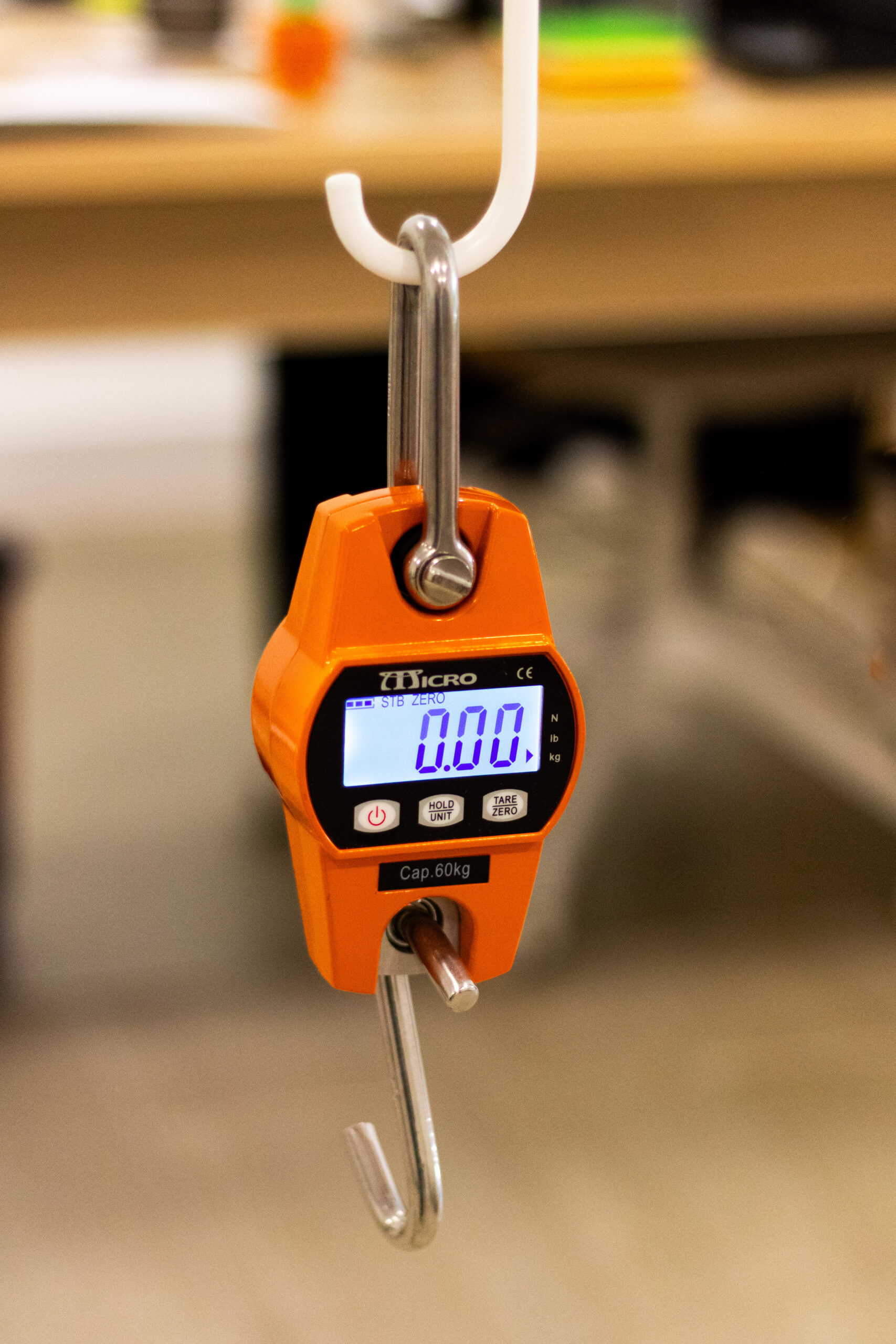
| Suspended industrial loads | Hanging or crane scale |
| Vehicle load checks | Axle weigher |
| Samples, powders, and laboratory work | Digital or mechanical balance |
| Livestock, feed, grain, and produce | Agricultural or livestock scale |
Industry Examples: Hire or Buy?
The right decision can vary by industry because each workplace uses scales differently.
Retail and Food Businesses
Retailers may hire extra scales for seasonal demand, temporary counters, renovations, or special events. Buying is generally stronger value for a permanent shop, butchery, bakery, deli, supermarket, or produce outlet where the scale is used throughout the day. If products are priced by weight, confirm the trade-use status and verification requirements before using the scale for customer transactions. A temporary scale must still be appropriate for the job.
Manufacturing, Warehousing, and Logistics
Manufacturing and logistics operations often use scales daily for raw materials, pallet receiving, parts counting, finished goods, dispatch, and inventory control. Buying is often the stronger choice where the equipment supports a permanent workflow. Hiring can still be useful for temporary overflow, shutdown periods, stocktakes, a new project, or a replacement during repair. The business should select equipment based on the load, working area, traffic level, and handling method.
Laboratories, Clinics, and Precision Applications
Laboratories, medical facilities, and quality-control areas often need stable equipment with suitable readability and controlled placement. Buying can make sense where the scale is part of a fixed process and used regularly. Hiring can be useful for temporary research work, overflow testing, short-term clinics, or a replacement unit. Confirm the required capacity, readability, calibration status, and environmental conditions before choosing the equipment.
Agriculture and Seasonal Operations
Farms, produce suppliers, and livestock operations may have busy seasonal periods. Hiring can help during harvest, livestock sales, temporary processing, or short-term storage activity. Buying may suit farms that weigh feed, livestock, grain, fertiliser, or produce regularly across the year. Outdoor conditions matter. Confirm whether the scale needs portability, battery operation, weather protection, or a larger platform before arranging hire or purchase.
A Simple Five-Step Decision Process
Use this process before requesting a quote.
- Define the job. Identify what will be weighed, the heaviest normal load, the smallest important weight change, and how often staff will use the scale.
- Set the time period. Decide whether the need is temporary, seasonal, or permanent.
- Compare the total cost. Include hire charges, purchase cost, delivery, installation, service, calibration, verification, and downtime.
- Check compliance needs. Confirm whether the scale will be used for selling, billing, or other trade transactions.
- Confirm support. Ask what happens if the scale needs repair, adjustment, calibration, replacement, or re-verification.
How Scales4U Can Help
Scales4U offers scale hire for a range of weighing applications and also provides calibration, maintenance and repair, service-level agreements, and legal verification support. This allows businesses to compare temporary and permanent options with the full operating requirement in mind. Whether you need a short-term platform scale for a project, additional retail weighing capacity for a busy season, or a permanent industrial weighing solution, the first step is to share the application details. Scales4U can help match the scale type, capacity, readability, and support requirements to the job.
Frequently Asked Questions
Is it cheaper to hire or buy a scale?
Hiring can cost less for a short-term, seasonal, or one-off need because there is no large purchase cost. Buying can offer better value where the scale is used regularly over a long period. Compare the full cost of each option before deciding.
Can I hire a scale for a stocktake?
Yes. Hiring can be useful for annual stocktakes, temporary warehouse capacity, project work, or short periods of increased demand. Confirm the required capacity, scale type, delivery date, and hire period before booking.
Does scale hire include calibration and maintenance?
Do not assume these services are included. Ask for written confirmation of what the hire agreement covers, including calibration status, repairs, delivery, collection, and any trade-use requirements.
Can I hire a trade-approved scale?
A trade-approved scale may be available for qualifying applications, but you should explain whether the scale will be used to sell or bill by weight. Confirm the required verification status before using hired equipment for a commercial transaction.
When should a business buy a scale?
Buying is often suitable when the scale is used daily, forms part of a permanent process, needs a fixed installation, or must always be available on site.
What should I check before hiring a scale?
Check the scale type, capacity, readability, delivery timing, site access, power needs, responsibility for damage, rental period, calibration status, and any verification requirement for trade use.
Hire or Buy With the Right Information
Hiring is a practical option for temporary work, seasonal demand, short projects, stocktakes, and emergency replacement needs. Buying is often the better choice for daily use, permanent installations, and long-term operational control. The best decision comes from matching the scale to the job, the time period, the required accuracy, and the full cost of support. Speak to Scales4U about your application to compare hire and purchase options, then choose equipment that fits your business from the first day of use.