
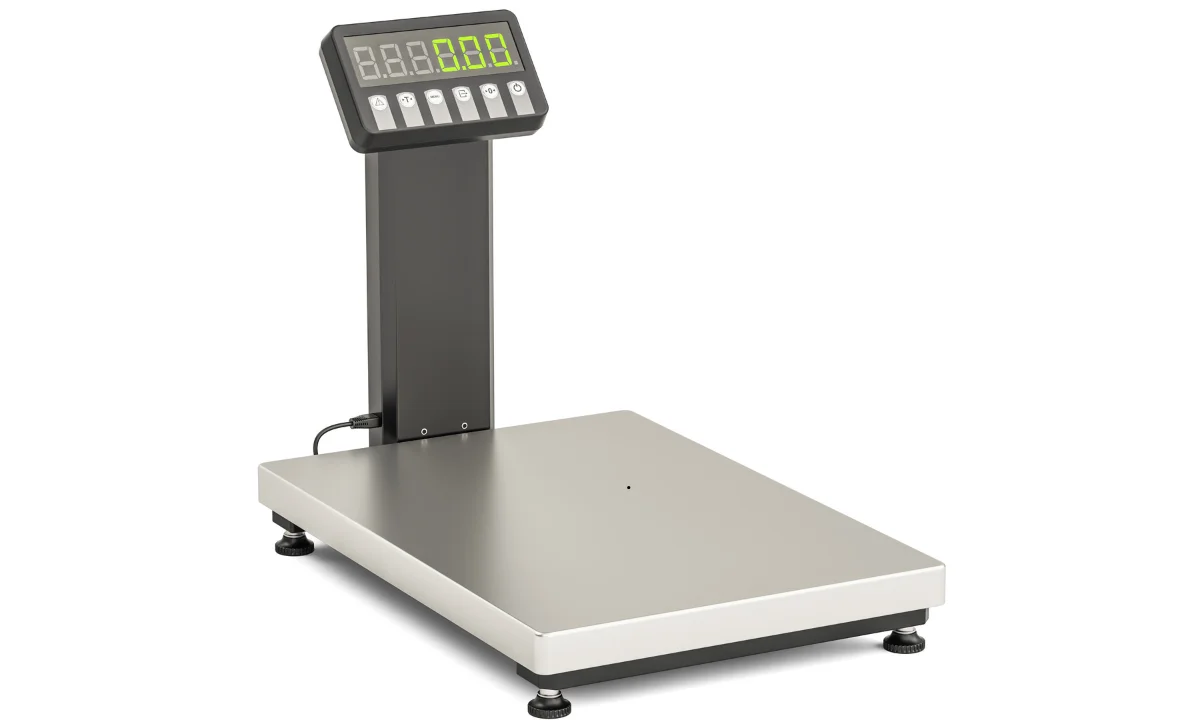
Buying an industrial floor scale is a significant investment for any South African business, but choosing the wrong material can cause the equipment to fail in just a few months. Many warehouse managers and factory owners find themselves stuck with rusted platforms that lose accuracy or fail health inspections because they chose a budget-friendly metal for harsh environments. On the other hand, spending too much on high-grade steel for a dry, clean warehouse is a waste of capital that could be used elsewhere. At Scales4U, we help you avoid these costly mistakes by matching the right metal to your specific working conditions, ensuring your scale remains accurate and compliant for years to come.
The High Stakes of Material Selection
The material of your floor scale is the first line of defense against the daily wear and tear of your facility. In a busy logistics hub in Johannesburg, a scale needs to withstand the heavy impact of pallets being dropped by forklifts, while a food plant in Cape Town needs a scale that can withstand daily water and chemical spray. If you choose a metal that cannot withstand your environment, you will face scale drift, in which the internal sensors become misaligned due to rust or structural damage. Choosing between mild steel and stainless steel is essentially a choice between saving money upfront and investing in long-term survival against moisture and chemicals.
Mild Steel Floor Scales: The Industrial Workhorse
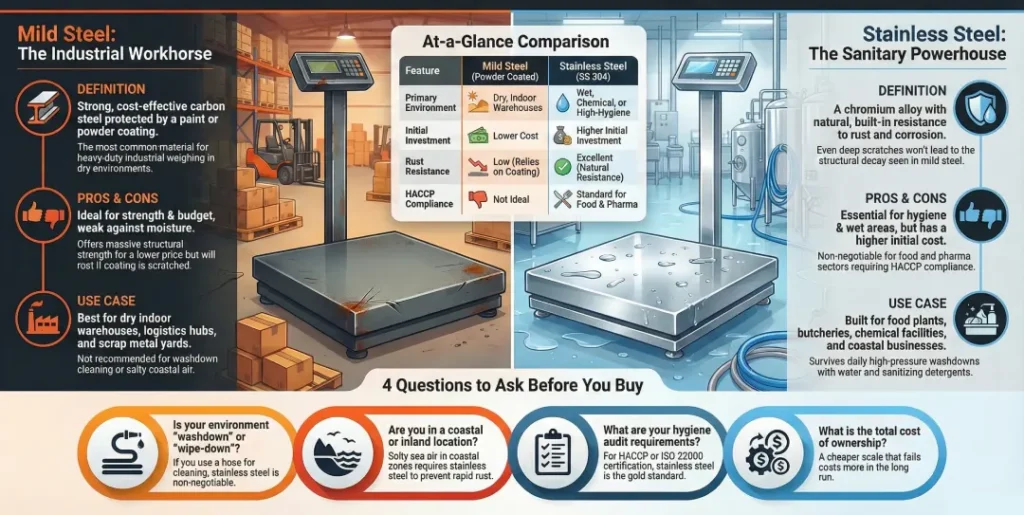
Mild steel, also known as carbon steel, is the most common material used for heavy-duty industrial weighing because it is incredibly strong and cost-effective. These scales are typically finished with a high-quality powder coating or industrial paint to protect the metal from exposure to the elements. In a dry environment, such as a shipping warehouse, a manufacturing plant for dry parts, or a scrap metal yard, mild steel is the perfect choice because it offers substantial structural strength at a lower cost. It can support weights of up to 10 tons without bending, making it the ideal workhorse for general industrial applications where moisture is not a constant threat. If you choose a metal that cannot handle your environment, you will face scale drift; understanding why you should calibrate your scale regularly is the only way to catch these inaccuracies before they affect your bottom line
Limitations of Mild Steel
The biggest weakness of mild steel is its vulnerability to oxidation, more commonly known as rust. While the powder coating provides a shield, any scratch from a pallet or a forklift fork exposes the raw carbon steel underneath. Once moisture hits that exposed metal, rust begins to spread under the paint, eventually weakening the structure and reaching the sensitive load cells. For this reason, mild steel is not recommended for any environment that requires washdown or for coastal businesses, where salty sea air can cause rapid corrosion even indoors.
Stainless Steel Floor Scales: The Sanitary Powerhouse
Stainless steel is an alloy that contains chromium, which creates a thin, invisible layer on the surface that prevents rust. In the weighing industry, we primarily use SS 304 grade because it is non-porous and resists bacterial growth, which is a non-negotiable requirement for HACCP compliance in the food and pharmaceutical sectors. These scales are built to survive wet environments where they are regularly exposed to water, brine, blood, or harsh sanitizing detergents. Because the metal itself is rust-resistant all the way through, even a deep scratch on the surface will not lead to the structural decay that you would see in a painted mild steel scale. For the food and pharmaceutical sectors, we provide specialized retail scales made from high-grade stainless steel that resist bacterial growth and withstand frequent washdowns.
Mild Steel vs. Stainless Steel Comparison
To help you decide which material fits your budget and environment, we have compared the key factors that typically influence purchasing decisions for South African businesses.
| Feature | Mild Steel (Powder Coated) | Stainless Steel (SS 304) |
| Primary Environment | Dry, Indoor Warehouses | Wet, Chemical, or High-Hygiene |
| Initial Investment | Budget-Friendly / Low Cost | Higher Initial Investment |
| Rust Resistance | Low (Relies on Coating) | Excellent (Natural Resistance) |
| Cleaning Method | Wipe-down / Dry Sweep | High-Pressure Washdown |
| HACCP Compliance | Not Ideal for Food Contact | Standard for Food & Pharma |
| Structural Impact | High Resistance to Dents | High Resistance to Corrosion |
The Hidden Variable: Load Cell Protection (IP67 vs. IP68)
A floor scale is only as reliable as the sensors hidden beneath its platform, and this is where many buyers make a mistake. Even if you buy a high-grade stainless steel frame, the scale will fail if the internal load cells are not properly protected from the environment. In the weighing industry, we use Ingress Protection (IP) ratings to measure this. Most mild steel scales use alloy steel load cells with an IP67 rating, which means they can withstand dust and light splashes of water. However, for true wet environments, you need stainless steel load cells with an IP68 rating. These sensors are often hermetically sealed with a laser-welded sleeve, making them completely air-tight and water-tight. This level of protection prevents moisture from wicking into the electronics, which could cause the scale to provide erratic or drifting readings.
When to Go Hybrid: The MS Frame, SS Top Solution
Sometimes, the best solution is not a choice between one or the other, but a combination of both. A hybrid floor scale typically features a rugged, powder-coated mild steel frame for structural strength and a removable stainless steel top plate. This is a brilliant middle ground for South African businesses that need a hygienic surface but operate in a relatively dry area. For example, a packaging plant in Gauteng might use a hybrid scale to weigh boxed food products. The stainless steel top ensures that any contact with the product remains sanitary and is easy to wipe down, while the mild steel frame keeps the overall cost of the scale much lower than a full stainless steel model.
Geographic Influence: Coastal vs. Inland Selection
In South Africa, your physical location plays a massive role in how your scale will age. If your facility is located in an inland province such as the Free State or Limpopo, the air is dry enough that a well-maintained mild-steel scale can last for over a decade. However, for businesses in coastal cities such as Durban, Port Elizabeth, and Cape Town, the high salt content in the humid air poses a constant threat. Salt accelerates rust, eating through powder coatings and attacking the underlying metal. In these coastal zones, Scales4U almost always recommends upgrading to at least a 304-grade stainless steel scale to prevent the sea air from destroying your investment within the first few years of use.
Maintenance Needs: Keeping Your Metal in Top Shape
The lifespan of your scale depends on how much effort you put into maintaining its protective layers. For a mild steel scale, this means regularly inspecting the platform for chips or deep scratches. If you see bare metal, it must be touched up with industrial-grade paint immediately to stop rust from taking hold. For stainless steel scales, maintenance is much simpler but still necessary. While it won’t rust in the traditional sense, it can develop pitting if harsh chemicals or salty liquids are left on the surface for too long. A simple routine of rinsing the scale with clean water after a shift and occasionally using a stainless steel polish will keep the metal’s protective oxide layer self-healing and effective.
| Factor | Inland (Dry Regions) | Coastal (Salty/Humid) |
| Recommended Material | Mild Steel (Powder Coated) | Stainless Steel (SS 304/316) |
| Rust Risk | Low / Manageable | Very High |
| Typical Lifespan | 8–12 Years | 2–4 Years (Mild Steel) vs 10+ (SS) |
| Maintenance Level | Moderate (Touch-up paint) | High (Regular rinsing/cleaning) |
Environmental Impact & Total Cost of Ownership
When choosing between mild steel and stainless steel, it is vital to look past the initial purchase price and consider the Total Cost of Ownership (TCO). While a powder-coated mild steel scale is roughly 40% to50% cheaper upfront, it often becomes the more expensive option over a five-year period if used in the wrong setting. For example, a mild steel scale in a wet South African butchery may require replacement every 24 months due to structural rust, whereas a 304-grade stainless steel scale from Scales4U can easily last a decade or more. While regular cleaning helps, eventually every piece of industrial equipment reaches its limit. How often you should replace your scale helps you determine if a rusted frame is a safety hazard. Furthermore, stainless steel maintains a much higher scrap and resale value. In the current South African recycling market, stainless steel scrap can fetch significantly higher prices per kilogram compared to mild steel, making it a safer long-term financial asset for your business.
Selection Guide: 4 Questions to Ask Before Buying
To ensure you aren’t overspending or under-protecting your facility, ask these four critical questions before finalizing your order:
- Is the environment a washdown or wipe-down?
If you use a hose or high-pressure sprayer to clean, stainless steel is non-negotiable. - Are there corrosive chemicals or salt involved?
Coastal businesses or chemical plants must choose stainless steel to prevent rapid pitting. - What is the hygiene audit requirement?
If you are pursuing HACCP or ISO 22000 certification, stainless steel is the gold standard for passing health inspections. - Will the scale be in a pit?
Pit scales are prone to water pooling and moisture buildup; even in dry warehouses, a stainless steel frame is often preferable for pit installations to prevent hidden rust on the underside.
Conclusion: Protecting Your Weighing Investment
Ultimately, the choice between mild steel and stainless steel comes down to balancing your immediate budget and your operational environment. Mild steel remains the king of the dry warehouse, offering unmatched structural strength and value for money in logistics and general manufacturing. However, in any industry where moisture, salt, or hygiene is a factor, stainless steel is an investment in peace of mind. By selecting the correct material, you ensure that your scale remains a reliable asset that provides accurate data day after day. At Scales4U, we pride ourselves on helping South African businesses navigate these choices to find the most durable weighing solutions possible.
FAQ: Mild Steel vs. Stainless Steel Floor Scales
Can I use a mild steel scale in a butchery?
It is not recommended. Butcheries require frequent cleaning with water and detergents to manage organic waste and bacteria. A mild steel scale will rust quickly under these conditions, and the chipped paint can become a food safety hazard. A stainless steel scale is the correct choice for meat processing.
Does stainless steel ever rust?
While it is highly resistant, stainless steel can stain or pit if exposed to extreme levels of salt or very aggressive industrial acids without being rinsed. In highly corrosive environments, moving from 304-grade to 316-grade stainless steel (which contains molybdenum) provides even greater protection.
What is the price difference between MS and SS floor scales?
In the South African market, a full stainless-steel scale usually costs about 2 to 3 times as much as a mild-steel equivalent. This price gap is due to the higher cost of raw stainless steel and the more specialized welding and finishing techniques required to build the scale.
Which scale lasts longer in a dry warehouse?
In a perfectly dry warehouse, both materials will last a long time. However, mild steel is often tougher under structural impact. If your scale is likely to be hit by forklift forks or have heavy steel bins dropped on it, a heavy-duty mild steel platform with a checkered plate surface often handles the physical abuse better than a standard stainless steel plate.
How do I properly clean a stainless steel scale?
Use clean water and a mild detergent. Avoid using steel wool or carbon steel brushes, as they can leave tiny particles of ordinary steel on the surface that will rust, making the stainless steel look corroded. A simple rinse and a wipe with a soft cloth are usually all that is needed to maintain the hygienic surface.