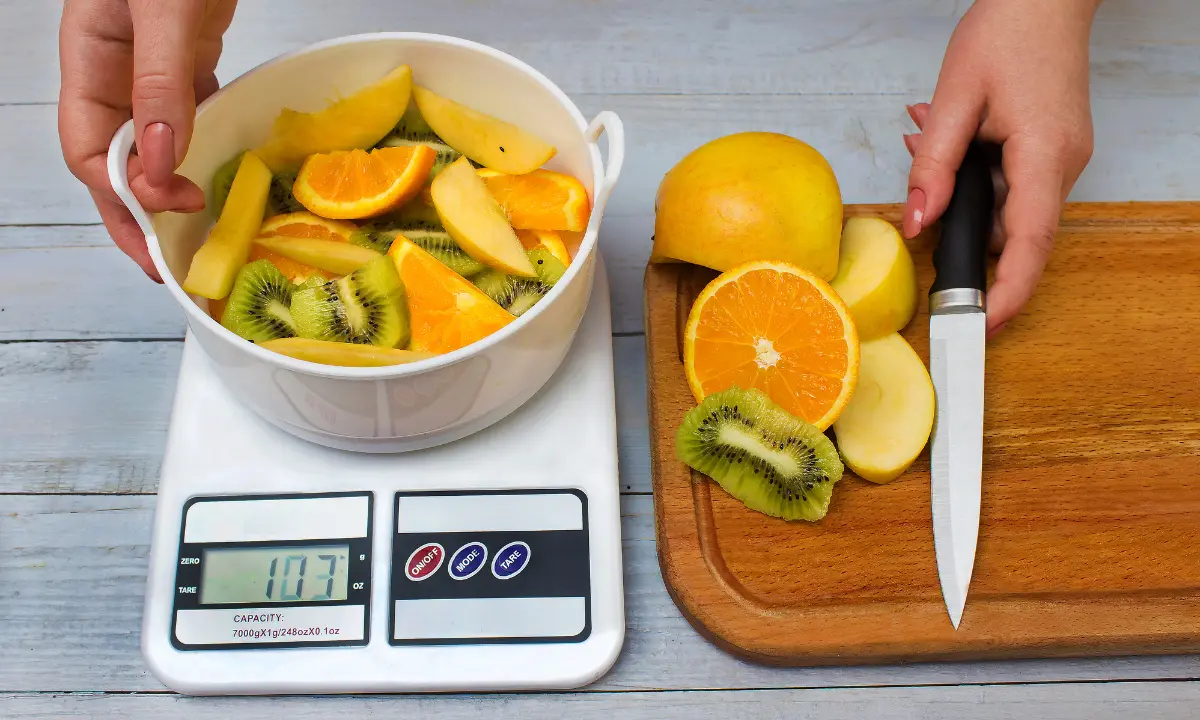
In the food industry, the role of precise measurements cannot be overstated. From ensuring the right portion sizes for consumers to maintaining product consistency, accurate weighing plays a significant part in delivering high-quality food products. Whether it’s in a restaurant kitchen, a large-scale food processing plant, or a grocery store, weighing scales are essential tools for food manufacturers, distributors, and retailers. But how do businesses in the food industry ensure they use the right scale? What types of weighing scales are most commonly used, and how can they help with the various processes in food production and packaging?
Why Weighing Scales Are Crucial in Food Processing
Weighing scales are integral to food processing for several reasons. They ensure the consistency of recipes, help avoid waste, and maintain product quality. In food production, measuring ingredients precisely can make the difference between a high-quality batch and one that falls short of standards. For example, many food products, from canned goods to ready-to-eat meals, must contain the exact amount of ingredients.
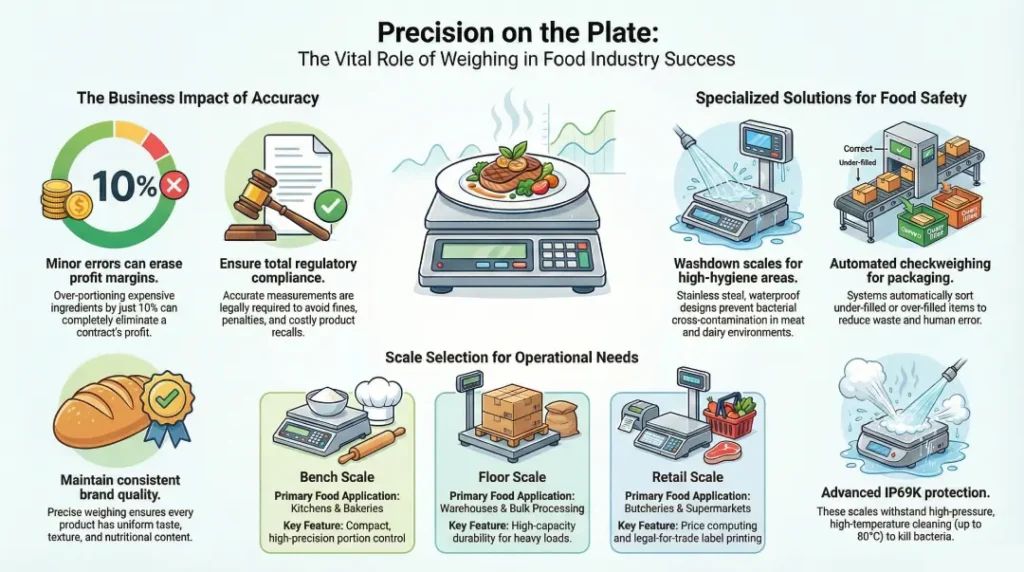
Accurate measurements ensure that each product is uniform in taste, texture, and nutritional content. For manufacturers, this means fewer customer complaints, improved brand loyalty, and better control over the production process. Moreover, weighing scales also help businesses in the food industry to comply with regulatory standards. In many countries, including South Africa, food packaging and labeling regulations require accurate weight measurements. This is vital to avoid fines, penalties, and legal issues.
Applications of Weighing Scales in the Food Industry
Weighing scales serve multiple roles across the entire food production and supply chain. Below are some of the key applications:
- Food Processing: Scales are used in ingredient measurement, ensuring that the right quantities of raw materials like flour, sugar, and spices are used to maintain consistency.
- Packaging: Accurate weighing ensures that food products are packaged according to their required weight specifications. This is crucial in preventing over-packing or under-packing, both of which can lead to waste or non-compliance.
- Logistics and Dispatch: When transporting food products, accurate weight measurements are necessary to meet regulatory requirements for shipment and distribution. This ensures that the correct amount of product is being transported and reduces discrepancies.
- Portion Control: In food service operations like restaurants or catering, portion control scales help maintain the right serving sizes, which is critical for cost control and customer satisfaction.
Weighing scales play a pivotal role in ensuring the food industry operates efficiently, meets standards, and produces high-quality food products that meet customer expectations. But how do businesses in the food industry ensure they use the right scale? At Scales4U, we provide expert guidance and a comprehensive range of equipment tailored specifically for the unique demands of the food sector.
Types of Weighing Scales Used in the Food Industry
Bench Scales: Precision in Small-Scale Weighing
Bench scales are widely used in food processing facilities, kitchens, and small-scale production environments. These scales are typically compact and easy to use, offering precision and reliability when measuring smaller quantities of ingredients.
Advantages:
- Compact Size: Ideal for spaces where counter space is limited.
- Ease of Use: Simple controls make them perfect for fast-paced environments.
- High Precision: Bench scales provide accurate readings, ensuring consistency in ingredient measurement.
These scales are particularly useful in kitchens where the weight of individual ingredients needs to be carefully controlled, such as in bakery operations, small batch food production, or when preparing recipes that require precise measurements.
Floor Scales or Platform Scales: Handling Heavy Loads
Floor scales are essential in large-scale food processing plants, warehouses, or shipping areas. These scales are designed to handle heavy loads, such as large containers or bulk ingredients. They offer high capacity and are built to withstand heavy use in industrial environments. In environments like large food factories, heavy-duty scales ensure that bulk ingredients are measured accurately for further processing or packaging
Advantages:
- High Capacity: Can weigh large quantities or heavy food items like boxes, barrels, or bulk ingredients.
- Durable Design: Made to last in tough working conditions, often with stainless steel or corrosion-resistant surfaces.
- Easy to Use: Simple interface that allows workers to weigh large items quickly and efficiently.
In environments like large food factories or storage facilities, floor scales ensure that bulk food products are measured accurately for further processing or packaging.
Checkweighers: Ensuring Compliance in Packaging
Checkweighers are integral to the packaging process, ensuring that each product meets weight specifications. These scales are used in automated systems where products are continuously weighed during the production line. Checkweighers help in reducing over-packaging or under-packaging, which can affect product quality, pricing, and compliance with trade regulations.
Advantages:
- Efficiency: Automates the weighing process on production lines, reducing human error.
- Regulatory Compliance: Helps businesses comply with legal-for-trade requirements, ensuring that each package has the correct weight.
- Reduces Waste: Prevents packaging errors that could lead to product loss or customer dissatisfaction.
By using checkweighers, businesses can maintain consistent quality control and ensure that packaged goods meet the exact weight standards required.
Precision Balances: High Accuracy for Sensitive Measurements
For more sensitive weighing tasks, precision balances are used. These scales provide the highest level of accuracy and are often used in laboratory or high-end food production applications, such as in gourmet food or pharmaceuticals.
Advantages:
- Extreme Accuracy: Capable of measuring tiny amounts of ingredients or packaging components to milligrams.
- Consistency: Ensures that every measurement is highly accurate, important for maintaining product consistency in premium or regulated products.
Precision balances are perfect for operations that require exact measurements, like scientific research or developing specialized food products that require precise ingredient proportions.
Washdown Scales: Hygiene in Food Processing
In food processing, especially in industries like meat, seafood, or dairy, hygiene is critical. Washdown scales are designed to withstand frequent cleaning and exposure to water, ensuring that they stay free of contaminants while providing accurate measurements.
Advantages:
- Waterproof Design: These scales are built to be washed down with water and cleaning agents, making them ideal for wet environments.
- Corrosion-Resistant: Materials like stainless steel or specific plastic coatings prevent rust and corrosion, ensuring longevity and durability.
- Hygienic: Essential for meeting strict food safety regulations in environments where sanitation is a top priority.
Washdown scales are indispensable in environments where cleaning and sanitizing are frequent and necessary to maintain food safety standards. Implementing HACCP principles in your facility requires using non-corrosive, easy-to-clean scales to prevent bacterial cross-contamination.
| Scale Type | Primary Food Application | Key Feature |
| Retail Scale | Butcheries & Supermarkets | Price computing and label printing. |
| Checkweigher | Packaging Lines | Automatic sorting of under/over-filled items. |
| Carcass Scale | Abattoirs & Meat Processing | Overhead rail weighing for heavy loads. |
| Bench Scale | Commercial Kitchens & Bakeries | Compact, high-precision portion control. |
Importance of Accuracy and Precision in the Food Industry
Accurate weighing is crucial not only for product consistency but also for food safety and compliance with legal standards. Inaccurate measurements can lead to issues like incorrect portion sizes, packaging errors, and non-compliance with regulations, which can ultimately affect a company’s bottom line and reputation. In South Africa, if you are determining a price for a customer, you must use a verified retail scale to comply with legal metrology standards.
Impact on Product Quality:
Accurate weighing is essential for maintaining product quality and compliance in the food industry. Consistency is a key aspect, as it ensures that every product produced is the same every time, which is vital for customer satisfaction and brand integrity. When ingredient measurements are precise, it directly affects the taste and texture of the final product. This consistency in ingredients ensures that customers can expect the same high-quality experience with each product, whether it’s a packaged snack, a meal, or any other food item.
Impact on Compliance:
On the regulatory side, the food industry is heavily regulated, and meeting regulatory requirements for weight measurements is crucial. Accurate measurements are needed to comply with both local and international standards, such as those set by regulatory bodies like the FDA or local authorities in South Africa. Failure to meet these standards can lead to significant penalties, including fines or even product recalls. In South Africa, if you are determining a price for a customer, you must use a verified trade-approved weighing scale to comply with legal metrology standards.
In addition, food labeling must accurately reflect the weight of the product. Incorrect labeling can mislead consumers and potentially result in legal complications for businesses. Therefore, food manufacturers must use calibrated, reliable scales to maintain both quality and compliance.
Calibration: How to Keep Weighing Scales Accurate
To ensure accuracy, calibration plays a critical role. Calibration is the process of adjusting a scale to guarantee it provides correct readings. Regular calibration is necessary to keep scales accurate over time, as even the most precise equipment can drift. Scales that aren’t calibrated can start providing inaccurate readings, leading to production errors or failure to comply with regulations. In South Africa, businesses must ensure that their scales meet national and international weighing standards. While many modern scales feature automatic calibration, some still require manual calibration from time to time, depending on usage and environmental factors. By calibrating scales regularly, businesses can avoid errors and ensure that their scales remain compliant with all necessary standards.
Environmental Factors That Affect Scale Accuracy
Several environmental factors can affect the accuracy of weighing scales, which is why it’s important to use them in controlled environments. Temperature fluctuations can impact the internal components of scales, particularly the load cells and sensors, leading to inaccuracies. Similarly, air currents and vibrations in busy production environments can interfere with accurate measurements. To minimize these factors, scales should be used in stable, vibration-free environments whenever possible.
Additionally, surface leveling is crucial; scales must always be placed on flat, stable surfaces. Any tilt can result in incorrect measurements. By ensuring the proper environment and performing regular maintenance, businesses can keep their scales performing at peak accuracy, helping them maintain high-quality production standards and regulatory compliance.
Operational Benefits: Reducing Waste and Increasing Profit
Using accurate scales in the food industry is one of the fastest ways to improve your bottom line. Beyond simple compliance, strict portion control ensures that every meal served in a franchise or every bag of spice packed in a warehouse has the same cost profile. If a catering company over-portions a luxury ingredient like saffron or expensive meat by just 10% because of a faulty scale, their entire profit margin for that contract could disappear. By integrating check weighing and batching scales, managers can identify exactly where waste is happening in the production line, allowing for data-driven decisions that reduce shrinkage and maximize the yield of every raw ingredient purchased.
Maintenance and Calibration: Keeping the Line Moving
A scale is a precision instrument, and in the food industry, it is subjected to more stress than in almost any other sector. Regular maintenance is vital to prevent unexpected downtime, which can be incredibly expensive if a production line has to stop. We recommend a daily bump test using a standard test weight to verify the scale is zeroed correctly before the shift starts. Furthermore, professional calibration should be scheduled at least once or twice a year to adjust for any mechanical drift. When cleaning, always follow the manufacturer’s IP rating guidelines; even a waterproof scale can be damaged if high-pressure steam is directed at the wrong angle for too long.
FAQ: Weighing Scales in the Food Industry
What is a washdown scale?
A washdown scale is a weighing device specifically designed to be cleaned with water and sanitizing chemicals. Unlike standard scales, they feature sealed electronics and are made from non-corrosive materials like stainless steel. They are rated by IP (Ingress Protection) codes to show how much water pressure they can handle.
Does a food scale need to be NRCS-approved?
In South Africa, if you are using the scale to determine a price for a customer (e.g., in a butchery, deli, or fruit stall), it must be NRCS trade-approved. If you are using the scale only for internal portion control in a kitchen where the final dish has a fixed price, it does not legally require NRCS verification, though it should still be calibrated for accuracy.
How do I clean my digital food scale safely?
Always check the IP rating first. If it is IP65, use a damp cloth. If it is IP67 or higher, you can use low-pressure water. Never use abrasive metal scrubbers on the platform, as this can create scratches where bacteria can grow. Use food-safe sanitizers and ensure the scale is dried properly to prevent long-term moisture buildup around the sensors.
What is the difference between IP67 and IP69K for food scales?
IP67 means the scale can be dropped in a meter of water for 30 minutes. IP69K is much more advanced; it is designed for the heavy washdown found in meat processing plants, where the equipment is sprayed with high-pressure, high-temperature water (up to 80°C) to kill bacteria.
Can I use a plastic scale in a commercial kitchen?
While ABS plastic scales are affordable and fine for dry environments like bakeries, they are generally not recommended for raw meat or wet environments. Plastic can crack over time, creating harborage points where food particles get stuck, and bacteria thrive. Stainless steel is the industry standard for hygiene and long-term durability.