
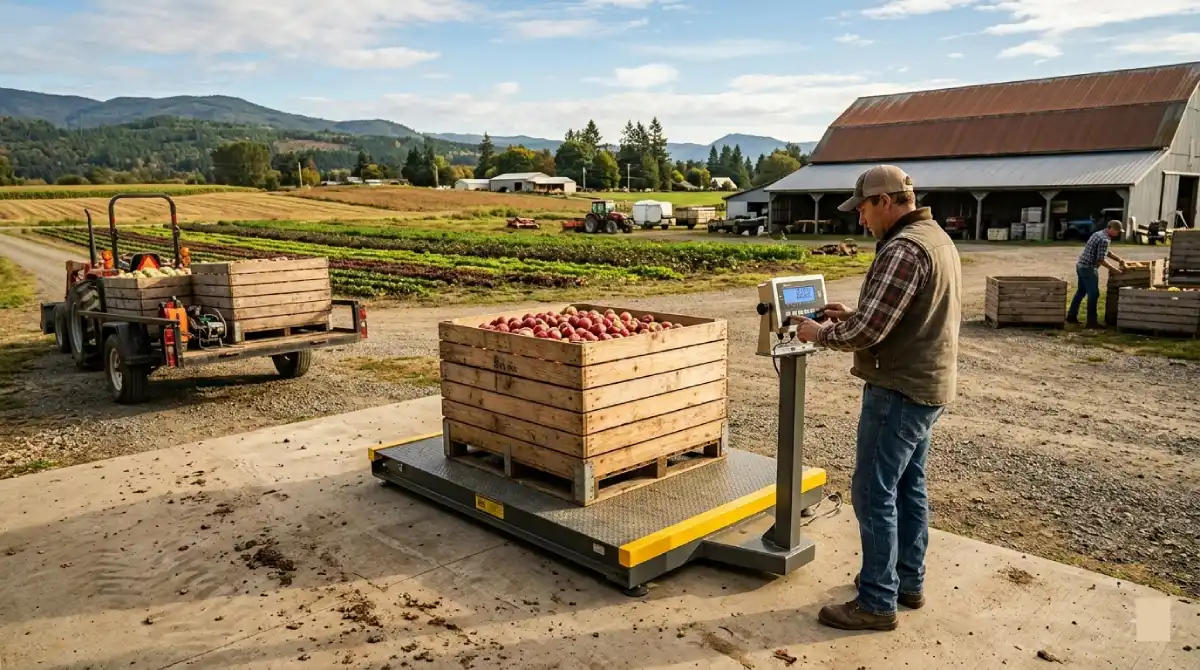
When it comes to running a successful agricultural operation, accurate weighing is crucial. Whether you’re managing livestock, harvesting crops, or dealing with bulk feed and fertilizer, the right weighing scale can save you time, reduce waste, and ensure compliance with regulations. But with so many options available, choosing the best weighing scales for your farm can be a challenge. This guide will walk you through the different types of agricultural weighing scales, explain their uses, and help you select the best one for your needs.
Why Accurate Weighing is Crucial in Agriculture
Impact on Pricing and Quality Control
Accurate weight measurements are essential for determining fair pricing, ensuring consistent quality, and preventing disputes. In the agricultural industry, goods like produce, livestock, and feed are often priced based on weight. A small discrepancy in weighing could lead to financial losses, especially when dealing with large quantities. Having the right scale ensures that the right price is charged, helping maintain good relationships with buyers and suppliers.
Legal and Regulatory Compliance
In South Africa, legal-for-trade certification is important for farmers who are involved in selling their products. Using scales that are NRCS certified ensures that your measurements are compliant with local trade regulations. Scales that are legally approved also help avoid disputes during transactions and meet the requirements of regulatory bodies, including the Department of Agriculture, Forestry and Fisheries.
Operational Efficiency
Weighing scales also play a critical role in streamlining operations. By using scales for tasks like weighing harvested crops, bulk feed, and livestock, farmers can better manage resources, reduce waste, and improve inventory management. Scales help track what’s coming into the farm (e.g., feed and fertilizer) and what’s being sent out, allowing for better logistics and decision-making.
Key Features to Look for in Agricultural Weighing Scales
Weight Capacity & Precision
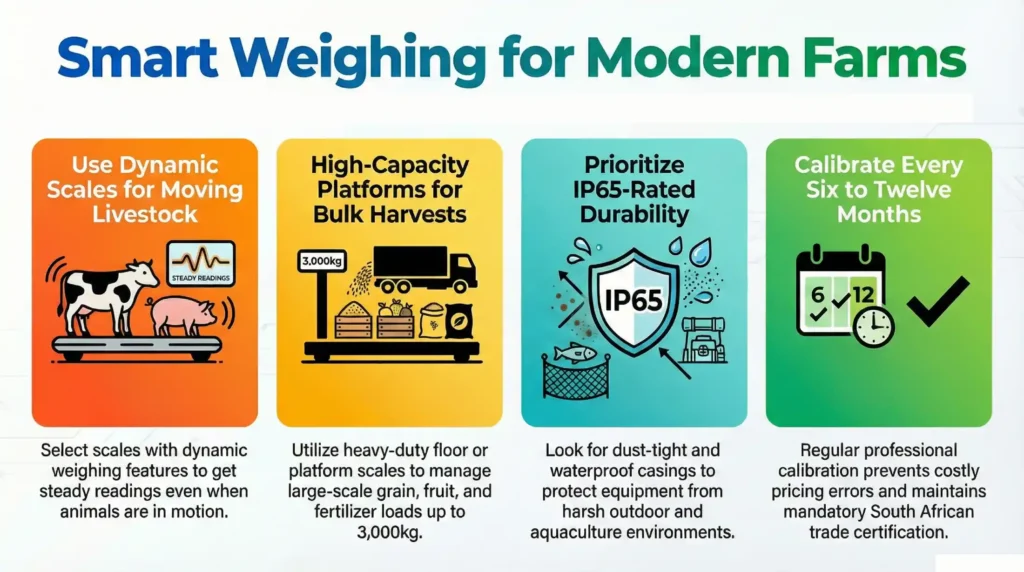
The capacity of a scale determines how much weight it can handle, and precision refers to how accurately it measures that weight. In the agriculture industry, scales must meet the needs of both large and small tasks. For example, a scale that is used to weigh livestock needs to have a high capacity and the ability to measure accurately even when the animals are moving. On the other hand, scales used for grain weighing may require smaller weight capacities but must have high precision to avoid waste and ensure proper trading.
- Small scale needs: For farm tasks like weighing small packages, feed bags, or produce, a bench scale with lower weight capacity (e.g., 100 kg) may suffice.
- Large scale needs: For livestock or bulk material weighing, floor scales or platform scales with high capacity (up to 3000 kg or more) are necessary.
Durability for Harsh Environments
Agricultural environments are tough on equipment. Scales need to withstand exposure to dust, moisture, and extreme temperatures. In addition, farm scales may be moved around frequently or exposed to harsh weather conditions. Look for scales that have a high IP rating, such as IP65, which means they are dust-tight and can withstand water splashes.
Scales built for outdoor use are often designed with weather-resistant casings and sturdy construction, ensuring longevity and reliable performance in tough conditions.
Portability vs. Stationary Use
Some tasks require portable scales, while others need stationary, heavy-duty scales. Consider your farm’s needs and how the scale will be used:
- Portable scales are great for livestock weighing in the field or for small produce at the market.
- Stationary scales are more suited for tasks like weighing bulk feed, grain storage, or larger shipments that require consistent, high-capacity measurements.
Power Supply Options
Scales used on farms may need to function in areas without reliable electricity. Consider scales that can run on batteries or solar power for remote locations or fields without power sources. Battery-powered scales offer the flexibility to move them around the farm or work in isolated areas, while AC-powered scales may be better suited for indoor use or high-volume tasks.
Types of Weighing Scales for Agriculture
Livestock and Animal Weighing Scales
Livestock scales are essential for tracking the growth, managing feed ratios, and recording slaughter weights of animals such as cattle, sheep, pigs, and goats. These scales are designed to handle dynamic weighing, which is crucial when working with moving animals. The scales typically range in capacity from 300 kg to 2000 kg, with higher capacities available for larger animals like cattle.
For farmers who need to weigh livestock in different locations around their farm, portable scales (such as the CS-1000 and CS-500) are ideal. These scales are lightweight and built for easy transport, ensuring that they can be moved between pastures, barns, or other farm areas as needed. Understanding digital weighing technology in agriculture allows farmers to capture accurate weights even with moving animals, reducing stress for both the livestock and the handler.
For weighing large animals or suspended loads, hanging scales are commonly used. These scales are excellent for farms that need to weigh animals that can be hoisted, like pigs and goats. The ability to weigh animals while they are suspended ensures accurate readings without the risk of movement affecting the measurement. A key factor for livestock scales is durability, they must be able to withstand outdoor use and the demanding conditions of a farm environment. Scales must also be built to handle the rigors of daily animal management and provide reliable, consistent measurements to help with weight tracking, health monitoring, and feed management.
Crops and Produce Weighing Scales
For farmers growing grain, fruit, or vegetables, platform scales and floor scales are invaluable tools for weighing harvested crops for inventory management and sales. Platform scales, such as the PS-1000F and PS-2000-10, are heavy-duty options designed for bulk produce weighing. These scales have a large surface area, making them ideal for weighing large amounts of produce like fruit, vegetables, and grain. Their high capacity is particularly useful for farms that harvest large volumes of crops, allowing for efficient and accurate weighing. Whether you are weighing crates of citrus or pallets of grain, Industrial Platform Scales provide the large surface area and high capacity needed for bulk logistics.
Floor scales are another excellent option for weighing bulk quantities of harvested crops. These scales are especially useful for weighing containers, pallets, or crates filled with produce. They provide high weight capacity and precision, which is necessary for farms that require consistent and accurate measurements during the harvest season. Additionally, many of these scales come with checkweighing capabilities, which help farmers ensure that weight targets are met, whether for compliance with regulations or for accurate pricing. These features also help reduce waste and prevent overloading, ensuring that farmers maintain profitability and operational efficiency.
Feed and Fertilizer Scales
Weighing feed, fertilizer, and other bulk farm materials accurately is critical for managing resources and ensuring that animals receive the correct amount of nutrients. Floor scales are ideal for weighing bulk feed and fertilizer inputs, with high weight capacities to accommodate large sacks or containers. These scales are designed for heavy-duty use and can handle the demanding weight of bulk materials like fertilizer, feed, and soil amendments. They provide accurate readings even when dealing with fluctuating loads, making them essential for precise resource management.
For farms that need to weigh large sacks or containers of feed or fertilizer, platform scales are also a great option. These scales are designed with a larger surface area, allowing for easier placement of heavy items. The high weight capacity and dynamic weighing capabilities of these scales ensure that even as the load fluctuates or shifts, the scale will still provide accurate readings. This feature is particularly useful when working with materials that are difficult to handle or measure accurately without the right equipment. These scales help farmers manage their input costs effectively and ensure that all materials are distributed in the right quantities.
Aquaculture Scales
In aquaculture farms, the accurate weighing of fish and other aquatic animals is essential for maintaining stock health and managing sales. Fishing scales are specifically designed for use in wet environments, such as ponds or farm dams, and are water-resistant to ensure their durability and functionality in these conditions. These scales typically handle smaller weights, ranging from 1 kg to 500 kg, making them perfect for weighing individual fish or small batches of aquatic life.
The waterproof design of fishing scales ensures that they remain functional even in damp and humid environments. This makes them ideal for use in aquaculture settings where moisture is a constant factor. Whether you’re monitoring the growth of fish or tracking the number of fish caught for sale, these scales help ensure that you get accurate, reliable readings every time. By using fishing scales, aquaculture farmers can improve the efficiency of their operations, ensure the health of their stock, and ensure that they meet market requirements for weight and quality.
Selecting the Right Scale for Your Farm Type
| Farm Type | Primary Scale Need | Recommended Solution |
| Livestock | Dynamic weighing for moving animals | Livestock Scales |
| Crop/Grain | Bulk pallet and crate weighing | Digital Platform Scales |
| Aquaculture | Waterproofing for wet environments | Veterinarian Scales |
| Input Management | Weighing bulk feed and fertilizer | Heavy-Duty Floor Scales |
Recommended Weighing Scales for Agriculture in South Africa
Choosing the right weighing scale for your agricultural operation depends on the tasks you need to accomplish, the capacity required, and the specific features that best suit your farming environment. Below, we’ve highlighted some of the top recommended scales for different types of farming operations in South Africa, covering everything from livestock scales to bulk crop weighing scales.
Livestock Weighing Scales
When it comes to managing livestock, having the right weighing scale is essential for monitoring the health and growth of your animals. Whether you’re managing cattle, sheep, goats, or pigs, these scales will ensure you can track their weight effectively and manage feeding ratios accurately.
- CS-1000 and CS-500 (Portable Scales)
- Capacity: 1000 kg – 5000 kg
- Features: These portable and rugged scales are perfect for weighing livestock in the field or at a livestock station. They’re easy to move, so you can weigh animals across various locations on the farm. The scales feature dynamic weighing, which allows for accurate measurements even when the animals are moving.
- Price Range: R1,199 – R1,999
- Why Choose This Model: Ideal for cattle farms or sheep/goat farming that require mobility and ease of use.
- Durability: Built to handle rough outdoor environments, making it perfect for farms with variable weather conditions.
Crops and Produce Weighing Scales
Weighing harvested crops and produce efficiently is crucial for keeping track of inventory and managing stock. Having a platform scale or floor scale ensures that you can manage larger quantities quickly and accurately.
- PS-1000F and PS-2000-10 (Platform Scales)
- Capacity: 1000 kg – 2000 kg
- Features: These heavy-duty platform scales are perfect for large-scale grain, fruit, or vegetable weighing. With a sturdy frame and large weighing surface, they’re ideal for palletized goods and large batches of produce.
- Price Range: R4,299 – R7,699
- Why Choose This Model: If you deal with large quantities of crops, whether it’s grain, fruit, or vegetables, these scales are durable, reliable, and designed for high-volume use.
- Durability: Built to withstand harsh conditions typically found in harvest environments like fields, warehouses, or farms.
- Floor Scales
- Capacity: 1,000 kg – 3,000 kg
- Features: Floor scales are excellent for heavy produce and bulk grains, as they allow you to weigh large containers, sacks, and crates. They are often equipped with built-in ramps for easy loading of bulky items.
- Why Choose This Model: Perfect for farmers handling bulk harvests or large loads such as pallets of potatoes, grains, or fertilizers.
- Durability: Designed to handle heavy loads and frequent use in both outdoor and indoor environments.
Feed and Fertilizer Weighing Scales
Precise measurement of feed and fertilizers is essential for ensuring that animals receive the right amount of nutrition and that the farm is using inputs efficiently. Floor scales are most commonly used for these applications, providing the accuracy and durability needed for large-volume measurements.
- PT Platforms (Heavy-Duty Floor Scales)
- Capacity: 1,000 kg – 3,000 kg
- Features: These platforms are capable of dynamic weighing, which allows them to measure moving or fluctuating loads accurately. Ideal for measuring bulk inputs such as feed, fertilizer, and other materials that are loaded in large quantities. With anti-slip surfaces and easy-to-use digital displays, they offer clear readings.
- Price Range: R5,000 – R15,000
- Why Choose This Model: For bulk material weighing, whether it’s grain, feed, or fertilizer, these scales are durable and built to withstand continuous use in high-volume settings.
- Durability: Tough enough for rough farm environments and built for heavy use.
Aquaculture Scales
For farms involved in aquaculture, precision weighing of fish and other aquatic animals is important for stock management, sales, and monitoring growth.
- Fishing Scales
- Capacity: 1 kg – 500 kg
- Features: Waterproof and portable, these scales are designed specifically for use in aquaculture settings. They can be used in ponds or farm dams to accurately weigh fish and other aquatic animals.
- Price Range: R1,000 – R2,500
- Why Choose This Model: If you manage fish farming or other aquatic farms, this scale is easy to use, rugged, and accurate, even in wet conditions.
- Durability: Perfect for moist, wet environments, ensuring reliable readings even in water-saturated areas.
How to Choose the Best Weighing Scale for Your Farm
Choosing the right scale involves understanding your farming operation’s needs. Different tasks require different scales, so it’s important to match the scale to the farm’s specific needs. Here are a few things to consider when making your selection:
Farm Size and Operations
- For small-scale farms, bench scales or portable hanging scales may suffice for general produce weighing or small livestock management.
- Large-scale farms that handle bulk grains, livestock, or feed will benefit from floor scales, platform scales, or even truck scales for transport weighing.
Type of Agriculture
- Livestock farms will need scales with dynamic weighing to accommodate moving animals. Portable scales or weighbridges are great for weighing animals on the go.
- Crop farms often require platform scales with large surfaces for weighing harvested goods in bulk.
- Aquaculture farms require specialized fishing scales that are waterproof and can handle wet environments.
Budget and Features
- Affordable scales like bench scales or small platform scales are great for smaller farms or operations with lower volumes.
- For larger operations, it may be worth investing in higher-capacity scales with additional features like automated calibration or remote data logging for easy monitoring.
Maintenance and Calibration: Keeping Your Scales Accurate
Once you’ve selected the right scale for your agricultural needs, it’s important to maintain and calibrate it regularly to ensure consistent accuracy and reliable performance. It is vital to know that your weighing scale is correct by performing regular zero-checks and span tests. Regular maintenance and calibration not only extend the lifespan of your scales but also prevent costly errors and ensure compliance with South African trade regulations.
Why Calibration is Essential
Calibration is the process of adjusting a scale to ensure that it provides accurate readings. If your scale is improperly calibrated, it can lead to discrepancies in weighing, which could result in financial losses, regulatory violations, and customer dissatisfaction.
- Regulatory Compliance: For farms selling produce, livestock, or other goods by weight, legal-for-trade scales must be regularly calibrated and certified to meet local regulations, such as those set by the NRCS(National Regulator for Compulsory Specifications).
- Accuracy: Calibration ensures that your scale reads accurately, avoiding mistakes in pricing, inventory management, and product quality control. Accurate weighing is critical for pricing produce fairly, maintaining proper feed rations for livestock, and ensuring that the right amount of materials like fertilizer are used.
How Often Should You Calibrate Your Scale?
Calibration frequency depends on several factors:
- Usage Frequency: Scales used frequently (e.g., for daily weighing of produce or livestock) should be calibrated more often. For high-volume tasks, calibrate at least every 6 months to 1 year.
- Environmental Conditions: If your scales are exposed to extreme conditions such as moisture, temperature fluctuations, or vibration, they may require more frequent calibration. For instance, scales used in outdoor environments or aquaculture settings need to be checked regularly to ensure their accuracy.
- Regulatory Requirements: Depending on the type of farm and what you’re selling, some scales may be required by law to be calibrated and certified periodically. Always ensure that your scales meet these regulations.
Self-Calibration vs. Professional Calibration
Some scales, especially modern digital scales for agricultural use, come with self-calibration features. These scales automatically calibrate when environmental conditions change or when set intervals pass.
However, even with self-calibrating scales, periodic checks from a professional calibration service are recommended to ensure everything is operating within the correct standards. Professional calibration involves verifying the scale against certified calibration weights and performing adjustments to guarantee accuracy.
At Scales4U, we offer professional calibration services to ensure that your scales meet industry standards and maintain accuracy for optimal performance. Whether you need a one-time calibration or routine checks, we have the expertise and tools to service all types of agricultural scales.
Why Scales4U is the Trusted Partner for Agricultural Scales in South Africa
At Scales4U, we understand the unique challenges faced by farmers across South Africa. Whether you’re in the Karoo, Limpopo, or Johannesburg, we offer a range of high-quality agricultural scales that are perfect for any farming operation. We provide personalized consultations to ensure you select the best scale for your needs, whether it’s for livestock management, crop weighing, or feed handling.
Wide Range of Products
We offer a variety of agricultural scales designed to meet the demands of the industry:
- Portable and Hanging Scales: Ideal for livestock, small-scale produce, and moving between fields or markets.
- Platform and Floor Scales: Perfect for bulk weighing tasks, such as weighing grain, pallets, and large harvests.
- Aquaculture Scales: Specialized scales for fish farms, capable of weighing fish and aquatic animals in wet environments.
Professional Calibration and Maintenance Services
To ensure the long-term accuracy and performance of your scales, Scales4U offers calibration and repair & maintenance services. We’ll send a technician to your farm to calibrate your scales, check for wear, and ensure everything is working properly. Whether you need routine service or emergency repairs, we are committed to supporting your agricultural business with on-site and remote services.
Final Thought
Weighing is a vital part of the agricultural industry in South Africa. The right weighing scales ensure that you can effectively manage livestock, track the growth of crops, handle bulk materials, and remain compliant with local trade regulations. Whether you’re looking for portable livestock scales, heavy-duty floor scales, or specialized fishing scales for aquaculture, Scales4U offers high-quality options to suit every need.
Regular calibration and maintenance will ensure that your scales continue to perform accurately and reliably over time. If you’re unsure about which scale is best for your farm, or if you need professional calibration and support, Scales4U is here to help.