
Shipping costs can quickly become a major expense for businesses, especially when dealing with larger, bulkier items. Understanding dimensional weight is crucial for managing those costs effectively. Dimensional weight helps shipping carriers determine how much space a package will occupy in their vehicles, rather than just considering its physical weight. By knowing how dimensional weight works and how to calculate it, businesses can make smarter shipping decisions, optimize packaging, and ultimately save money.
We will tell you exactly what dimensional weight is, how it is calculated, and how you can manage it to lower your shipping costs. Whether you’re a small business owner or someone looking to streamline your shipping process, understanding dimensional weight is a must.
What is Dimensional Weight (DIM Weight)?
Dimensional weight, or DIM weight, is a pricing method used by shipping companies to determine the cost of shipping based on the volume of a package, rather than just its actual weight. Carriers like FedEx, UPS, DHL, and others will charge based on the higher of the actual weight or the dimensional weight. This method is particularly important for large, lightweight items that take up a lot of space in a shipping vehicle but aren’t very heavy.
This is particularly relevant in manufacturing and logistics companies, where shipping large, lightweight components can become unexpectedly expensive if the packaging isn’t optimized.
Why Dimensional Weight Matters
Shipping companies implemented dimensional weight to ensure that they charge fairly for large but light items that occupy more space in their cargo. This way, they can maximize the use of space in trucks, planes, and warehouses. If shipping companies only charged based on weight, light but bulky items could be shipped at a lower cost, which would lead to inefficiencies in their logistics systems. By implementing this pricing model, carriers promote business efficiency by forcing shippers to use smaller, more appropriate boxes, which reduces the number of vehicles needed on the road.
Example: Think of a large inflatable mattress. It’s light but occupies a lot of space in the carrier’s truck. Without dimensional weight, the shipper would pay only for the weight of the mattress, which wouldn’t fully account for the space it takes up. By using dimensional weight, the carrier charges based on both the size and the weight of the item, ensuring fairer pricing for bulky items.
Why Do Shipping Carriers Use Dimensional Weight?
The main purpose of dimensional weight is to ensure that shipping carriers are fairly compensated for the space packages occupy in their vehicles. By calculating both the actual weight and the dimensional weight of a package, carriers can choose the higher value to charge for, ensuring that they’re adequately compensated for the space taken up by lightweight but large items.
- Efficient Use of Cargo Space: By charging for space, carriers can more effectively utilize their available space. This helps them prevent overcharging for larger, lighter packages that still take up valuable cargo room.
- Fair Pricing for Bulky Items: Bulky items like foam mattresses, clothing, or plastic furniture that are light but take up a lot of space would otherwise be undercharged. Dimensional weight ensures that these shipments are priced fairly based on the space they occupy in transport.
Benefits of Dimensional Weight
- Maximizing Space: Optimizing cargo space reduces the need for more trucks, planes, or warehouse space, helping carriers save on fuel and other logistical expenses.
- Eco-Friendly: By reducing the need for excessive transportation, this method helps reduce carbon emissions, making it more environmentally friendly.
- Cost Efficiency for Shippers: While it might seem like dimensional weight could increase costs, it actually encourages better packaging practices. Smarter, smaller packaging helps businesses save on shipping while reducing packaging waste.
How is Dimensional Weight Calculated?
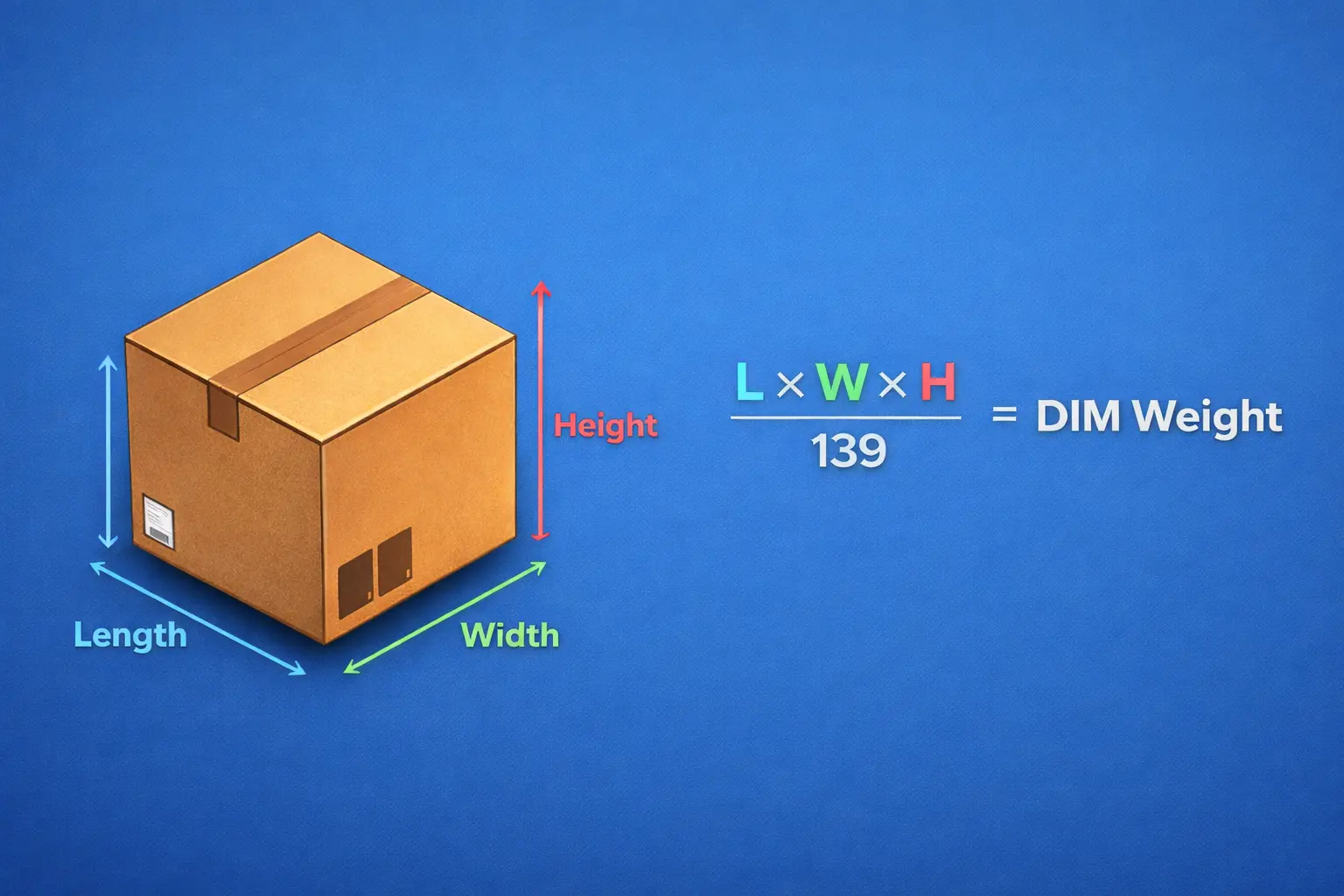
To calculate the dimensional weight of a package, the formula is simple:
Dimensional Weight = (Length × Width × Height) / Dimensional Factor
The dimensional factor is a value set by the shipping carrier, usually 139 for domestic shipments in inches or 5000 for international shipments in centimeters. This divisor can vary depending on the shipping carrier.
Steps for Calculation
- Measure the Package: Measure the length, width, and height of the package. It’s important to measure the longest parts of the package and to round the measurements up to the nearest inch or centimeter.
- Apply the Formula: Multiply the length, width, and height of the package, then divide the result by the dimensional factor.
- Round the Result: Round up the result to the nearest whole number, and that’s your dimensional weight in pounds or kilograms, depending on your measurement system.
To ensure your initial measurements are correct, you must use reliable equipment. For bulky but light shipments, Industrial Platform Scales allow you to capture the physical weight accurately while providing a stable base for measuring dimensions.
Example Calculation
Let’s walk through an example:
- Package Dimensions: 20 inches (Length) × 15 inches (Width) × 10 inches (Height)
- Formula: (20 × 15 × 10) = 3,000 cubic inches
- Dimensional Factor: 139 (standard for domestic shipping in the U.S.)
- Calculation: 3,000 ÷ 139 = 21.6 lbs (round up to 22 lbs)
If the actual weight of the package is less than 22 lbs, the DIM weight (22 lbs) will be used to calculate the shipping cost. If the actual weight exceeds the dimensional weight, the actual weight will be used.
When Does Dimensional Weight Apply?
Shipping companies use the higher of the two weights (actual or dimensional) to determine the chargeable weight. If your package is large but light, the dimensional weight will often be greater than the actual weight, and the shipping charge will be based on the dimensional weight.
For example, if your package weighs only 10 lbs but takes up a lot of space, its dimensional weight might be 22 lbs, meaning the carrier will charge based on 22 lbs, not 10 lbs. By understanding how dimensional weight works, businesses can optimize their packaging to reduce dimensional weight, thus lowering shipping costs.
How to Reduce Dimensional Weight and Save on Shipping
While dimensional weight is determined by the size of your package, you can actively manage it through better packaging. By adjusting your packaging materials and methods, you can reduce the space your items take up, lowering the dimensional weight and potentially cutting shipping costs.
1. Use Smaller Boxes
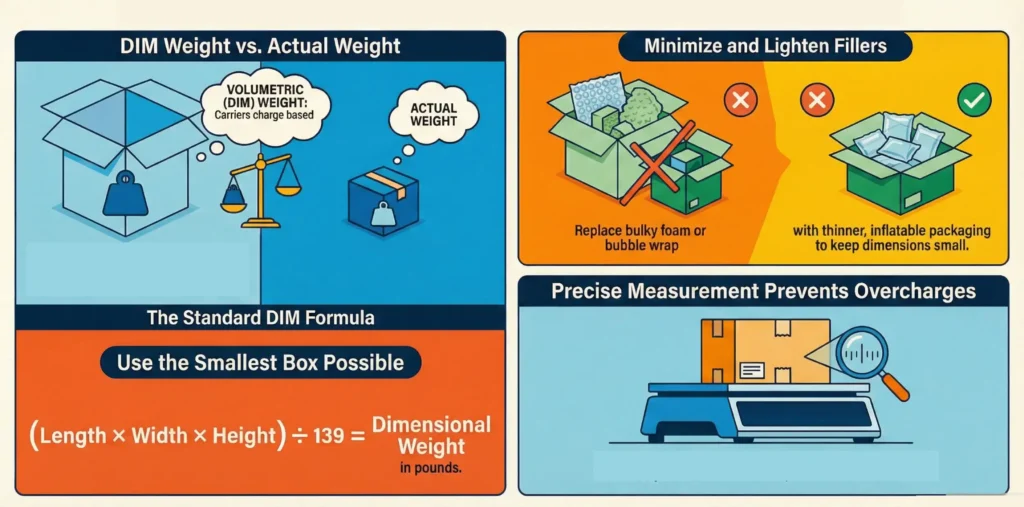
One of the easiest ways to reduce dimensional weight is to use the smallest box that fits your item. Oversized boxes increase the space a package occupies, which results in higher dimensional weight. Always choose a box that matches the size of the product, without excessive empty space around the item. This can drastically reduce the amount of space your product takes up in the shipping vehicle, potentially lowering your shipping charges.
2. Minimize Packaging Materials
Although protective materials such as bubble wrap, foam peanuts, and packing paper are important for ensuring items arrive safely, using too much can increase the size of the package and raise dimensional weight. Be strategic about the materials you use. Choose thinner, lighter alternatives that still offer protection but don’t add unnecessary bulk. For example, use inflatable packaging instead of large foam inserts or bubble wrap.
3. Compress or Flatten Items
For soft, flexible items like clothing or textiles, consider compressing or flattening them to reduce their volume. For textiles, use vacuum sealing. This is a common strategy in agriculture weighing technology when shipping wool or lighter organic fibers. This not only reduces dimensional weight but also helps keep the product safe during transit.
4. Properly Stack and Arrange Items
When packing multiple items in a box, make sure they are stacked and arranged as efficiently as possible. Avoid leaving air gaps or using excessive filler material. The more efficiently you use the available space, the less dimensional weight your package will have.
Using a Digital Platform Scale with a built-in interface can help log weights directly into your shipping software, reducing manual entry errors.
Using Dimensional Weight Calculators
To ensure your efforts to reduce dimensional weight are paying off, use dimensional weight calculators. Shipping carriers like FedEx, UPS, and DHL offer online tools that calculate dimensional weight based on package size and provide shipping quotes. These tools can help you fine-tune your packaging to minimize shipping costs.
Many of these calculators allow you to compare the actual weight and dimensional weight of your package side-by-side, giving you a clearer picture of which weight will be used to determine your shipping cost.
Dimensional Weight vs. Physical Weight: A Comparison
The main distinction between dimensional weight and physical weight lies in what they measure. Dimensional weight is calculated based on the space a package occupies, while physical weight is determined by the actual mass of the item being shipped.
- Dimensional Weight: Focuses on the volume the package occupies.
- Physical Weight: Measures the actual mass of the item.
Shipping companies charge based on whichever weight is greater. For instance, if the dimensional weight of your package is higher than the physical weight, you’ll be charged based on the dimensional weight, and vice versa. This is important because light but bulky items are more likely to incur higher charges based on dimensional weight.
Example of Dimensional vs. Physical Weight
Let’s say you have a package that weighs 8 lbs but takes up a lot of space:
- Package Dimensions: 20 inches × 15 inches × 12 inches.
- Dimensional Weight Calculation:
- (20 × 15 × 12) = 3,600 cubic inches.
- 3,600 ÷ 139 (dimensional factor) = 25.9 lbs (rounded up to 26 lbs).
In this case, the dimensional weight of 26 lbs is greater than the actual physical weight of 8 lbs. So, the shipping company would charge based on 26 lbs instead of the actual weight.
Best Practices for Managing Dimensional Weight in Your Business
Shipping costs can quickly add up, especially when dealing with large, lightweight items. Fortunately, there are several best practices that can help you effectively manage dimensional weight and avoid unnecessary expenses. By implementing these strategies, you can streamline your shipping process, reduce overhead, and ultimately improve your bottom line.
Right-Size Your Packaging
Choosing the right packaging is one of the most important steps in reducing dimensional weight. While it may be tempting to use large boxes for convenience, this can significantly increase shipping costs. A right-sized box should snugly fit the item with minimal void space, while still providing enough padding to protect the contents.
How to Right-Size Your Packaging:
- Choose the smallest box that fits the item comfortably.
- Avoid overstuffing the box with excessive filler materials.
- Use packaging material efficiently by using air pillows or foam to fill gaps without adding too much bulk.
This ensures that you’re only paying for the space the item truly occupies, rather than overestimating the package size due to poorly chosen packaging.
Use Lightweight Packaging Materials
In addition to right-sizing the box, the materials you use for packaging can make a big difference. Heavy packing materials like thick foam padding or multiple layers of bubble wrap add unnecessary weight to the shipment, which can increase both physical weight and dimensional weight.
Tips for Choosing Lightweight Packaging:
- Opt for air cushions or inflatable packaging for items that need extra protection.
- Use corrugated cardboard that provides sufficient protection but isn’t too thick or bulky.
- Eliminate unnecessary packaging materials—only use what’s essential for securing the item.
By using lightweight, efficient materials, you can reduce both the actual weight and the dimensional weight, helping to keep your shipping costs in check.
Consider Consolidating Shipments
If your business regularly ships multiple items, consolidating them into a single shipment can significantly reduce your shipping costs. Instead of shipping each item separately, combine multiple items into one package to maximize space efficiency and reduce dimensional weight.
How to Consolidate Shipments Effectively:
- Group items by size and weight to maximize the available space in the package.
- Ensure that the combined weight does not exceed the shipping limit for the selected service.
- Use a larger box only when necessary, keep the package as small as possible while fitting all items securely.
By consolidating shipments, you’ll only have to pay for the space used by the entire group of items, reducing the overall cost compared to shipping them individually.
How Scales4U Can Help with Accurate Dimensional Weight Measurement
Accurately measuring your packages is crucial for calculating dimensional weight. Incorrect measurements can lead to inaccurate shipping costs, which could result in paying more than necessary or even receiving the wrong charges from carriers. At Scales4U, we understand the importance of precise measurements, and we offer a range of high-quality digital scales that ensure you always have the correct weight measurements for your shipments.
Scales4U’s Solutions
- High-Accuracy Scales: Inconsistent measurements can lead to “back-charges” from carriers, where you are billed the difference after the package has been scanned at their hub. This often happens because of calibration issues with your on-site equipment.
- Versatile Measurement Options: Whether you’re measuring small packages or large shipments, we offer scales that are designed for all types of items, including industrial-grade scales for large, bulky items.
- Professional Calibration Services: To keep your scales performing at their best, Scales4U offers professional calibration services, ensuring your measurements are always spot-on. This can help you avoid discrepancies in your dimensional weight calculations and prevent overcharges from shipping carriers.
- Support for Businesses: We understand the challenges faced by businesses when managing shipping costs. That’s why we offer tailored advice on how to optimize your packaging and measurement process to reduce dimensional weight and save on shipping.
Ready to optimize your shipping process and save on costs? Contact Scales4U today to learn more about our range of digital scales and professional calibration services. We’re here to help businesses in South Africa achieve cost-effective shipping through precise measurements and smarter packaging.
Final Thought
Understanding dimensional weight is essential for businesses that rely on shipping. It not only helps you manage shipping costs effectively but also ensures that you’re not overpaying for large, lightweight packages. By implementing the right strategies, such as optimizing packaging, using lightweight materials, and consolidating shipments, you can significantly reduce your shipping expenses.
Scales4U is here to help. With our accurate digital scales and expert calibration services, you can confidently manage dimensional weight and save money on shipping. Reach out to us today to learn how we can support your business in reducing shipping costs and optimizing your packaging process.