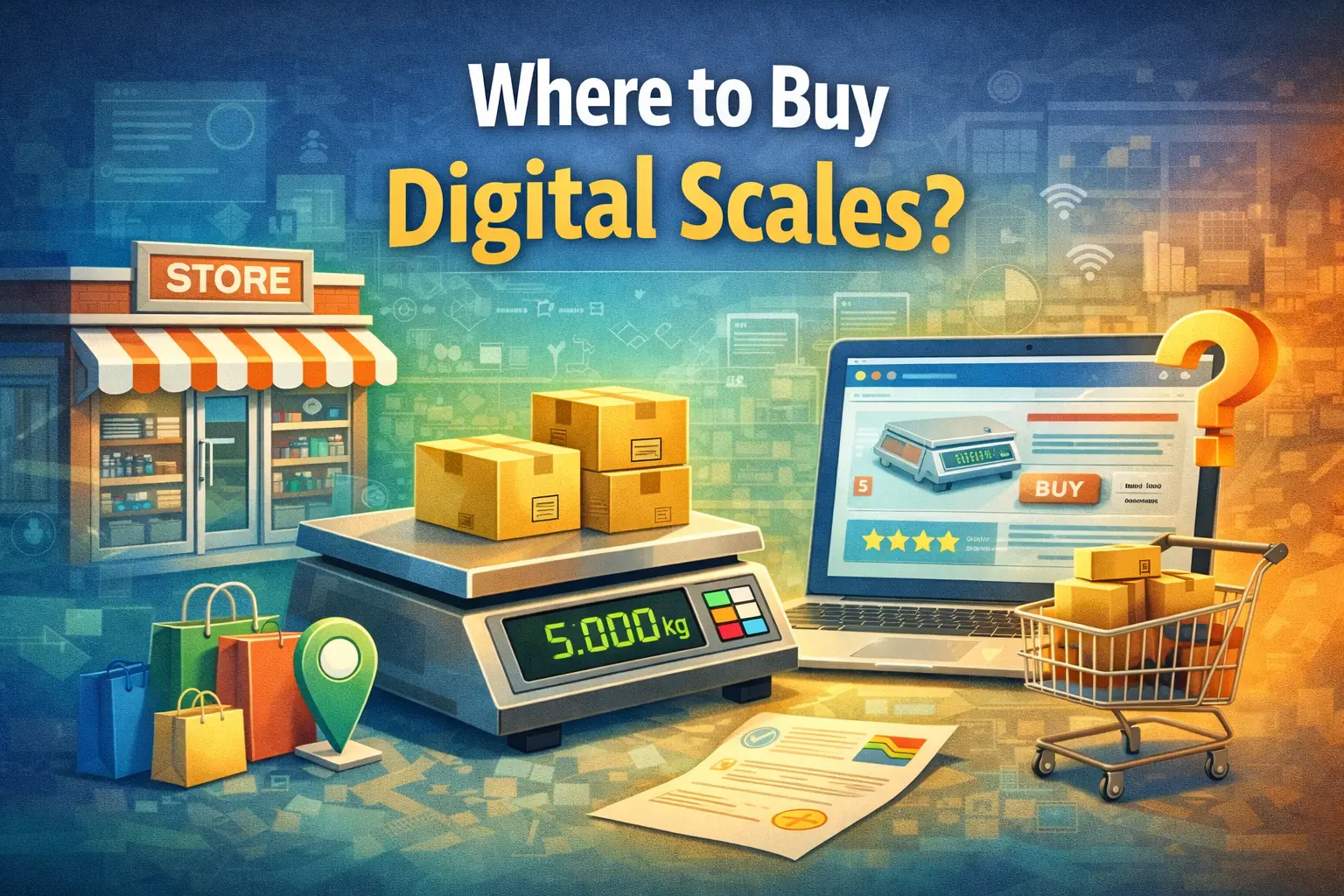
Choosing the right digital scale is rarely a matter of convenience; it is a critical decision that impacts accuracy, compliance, and long-term financial viability. For businesses in South Africa, from logistics firms weighing pallets to jewelers pricing precious metals, the purchasing source must guarantee more than just a working product. It must offer verified accuracy and essential after-sale support. Buying a high-capacity platform scale from a general online retailer, for example, risks non-compliance with the Legal Metrology Act, leading to potential fines and operational shutdowns. This comprehensive guide clarifies the purpose-driven path for finding the best where to buy digital scales, ensuring your investment is both accurate and legally compliant.
First Step: Matching the Scale to the Right Supplier
The single most important decision is understanding that the type of scale you need dictates the type of supplier you must use. The requirements for a simple kitchen scale are vastly different from those for a Trade Approved industrial scale that will be inspected by the NRCS.
Why the Scale Type Dictates the Retailer
Scales are manufactured and sold along a spectrum of accuracy and complexity. Consumer scales are disposable goods built for convenience. Industrial and laboratory scales are precision instruments that require specialized setup, calibration, and long-term service contracts. Attempting to purchase a high-precision instrument through a mass-market channel exposes your business to risks of poor technical support and non-traceable calibration.
The 4 Primary Types of Digital Scales & Their Requirements
| Scale Type | Typical Application | Key Requirements | Best Source Channel |
| Type A: Consumer Scales | Kitchen, Bathroom, Luggage | Low cost, simple operation, basic accuracy. | Mass-Market E-commerce, Big Box Retail |
| Type B: Retail/E-commerce Scales | Deli counters, Shipping stations, and Inventory counting | Durability, fast response time, connectivity (POS), and legal certification (if for trade). | Specialist Scale Supplier |
| Type C: Industrial Scales | Warehouses, Factories, Transport (e.g., Weighbridge) | High capacity, extreme durability (IP ratings), SANAS-accredited calibration support. | Specialist Scale Supplier |
| Type D: Precision Scales | Laboratory, Jewellery, Pharmaceutical | High readability (0.001g or better), anti-vibration features, and service contracts. | Specialist Scale Supplier |
Where to Buy Digital Scales: Prioritizing Expert Channels
When accuracy is linked to profit, legal compliance, or product quality, the purchasing channel must be chosen based on its expertise and commitment to quality, not just price.
Channel 1: Specialist Scale Suppliers (The Authority Choice)
For any business, laboratory, or industrial application, a specialist supplier like Scale4U is the safest and most profitable long-term choice. These companies specialize only in weighing technology and provide a level of support that general retailers cannot match, satisfying the highest standards.
The Unmatched Value Proposition
A specialist supplier provides critical services such as custom installation for heavy equipment like platform scales and ensures that the equipment is suitable for the harsh South African industrial environment. Their scales are typically sourced from trusted, global manufacturers and are supported locally. This expertise is necessary when dealing with technical issues like load cell failure or indicator programming.
Service Differentiation
Specialist suppliers maintain their own teams of certified technicians. They offer necessary post-sale support, including scheduled preventative maintenance and access to official service parts. Crucially, they hold or partner with SANAS-accredited laboratories, allowing them to perform traceable calibration services and legal verification. Without this accreditation, your scale’s accuracy cannot be legally trusted in a commercial setting.
Compliance Guarantee
For any scale used for sales based on weight (selling goods for money), legal certification from the NRCS is mandatory in South Africa. Specialist suppliers guarantee that the scales they provide are Type Approved by the NRCS and are supplied ready for initial verification. This compliance guarantee is the most important factor for any retail or industrial operation, protecting the business from significant regulatory risk and fines.
Channel 2: Mass-Market E-commerce Platforms (The Price Play)
These general online marketplaces offer convenience and low initial cost, making them ideal for buying digital scales for simple, non-critical household applications.
- Pros: Prices are competitive, the selection is vast (especially for consumer scales), and shipping can be fast.
- Cons: Technical support is almost non-existent for specialized equipment. There is a higher risk of purchasing scales that lack proper quality control, use non-certified components (e.g., power adapters), and often come without a verifiable local warranty. These platforms are not suitable for buying any scale that must be Legal for Trade.
Channel 3: Big Box Retail & Home Appliance Stores (The Instant Need)
These physical stores are suitable for immediate, low-stakes purchases where the buyer needs to see the product quickly.
- Pros: Customers can physically inspect the scale’s size and build quality, and immediate returns are simple. They are great for searches like “digital scales near me” for kitchen or bathroom scales.
- Cons: Product selection is severely limited, typically only stocking popular consumer models. Staff members generally lack the expertise to advise on technical specifications like accuracy tolerance, trade certification, or calibration requirements.
The Crucial Factors: Buying Safely and Smartly
For any commercial or industrial purchase, the acquisition of the scale itself is only the first step. The true cost and value are determined by the scale’s long-term performance, legal status, and support infrastructure. These crucial factors separate a smart investment from a costly mistake.
Verifying Accuracy and Calibration Support
A digital scale, regardless of its initial accuracy, will drift over time due to component wear, heavy use, and environmental factors. The supplier must not only sell an accurate scale but must also provide a verifiable system to maintain that accuracy.
The Necessity of Calibration
Calibration is the procedure by which a scale is tested against certified reference weights that are traceable to national standards. If the scale is found to be inaccurate, a qualified technician adjusts the scale’s settings to bring its readings back into tolerance. When choosing where to buy digital scales for business, you must ask for details on the supplier’s calibration program. A specialist supplier, such as Scales4U, guarantees that its calibration services are performed in accordance with internationally recognized standards and best practices, ensuring your scale’s accuracy is never compromised.
Traceability is Trust
The weights used for calibration must be certifiable and traceable. This means there is an unbroken chain of documentation linking the weights used in your factory back to the national measurement standards held by institutions like the CSIR in South Africa. This traceability is essential for quality audits and for proving that your weights are reliable in any legal dispute.
Checking for Legal Certification (Trade Scales)
In South Africa, if you sell goods by weight, the scale is legally considered an instrument of trade and is governed by the Legal Metrology Act.
The Mandatory Requirement for Trade
Every scale used for trade (where weight determines the price of a product, such as food, coal, scrap metal, etc.) must be Type Approved by the NRCS and then legally verified by a SANAS-accredited Verification Officer. Purchasing a scale from a supplier that is unfamiliar with this process or sells non-approved equipment puts your business at immediate risk of fines and operational shutdown. A specialist supplier handles this process as standard, ensuring that every retail or industrial scale purchased is immediately compliant and supplied with the necessary documentation for the first verification inspection.
Avoiding Fines
Before finalizing any commercial-scale purchase, explicitly confirm:
- NRCS Type Approval: Is the model officially registered for use in South Africa?
- Verification Support: Does the supplier offer verification services or can they reliably connect you with a SANAS-accredited service provider?
Assessing Post-Sale Commitment (Warranty and Repair)
For high-value equipment like a crane scale or a heavy-duty floor scale, a strong warranty and service agreement are more valuable than the initial cost savings.
The Importance of Expertise
A generic retailer may offer a one-year warranty, but if the scale breaks, they often offer only a replacement, not a repair. Industrial equipment requires specialized knowledge for repair, often involving complex electronics and load cell diagnostics. Specialist suppliers offer comprehensive maintenance and repair services, often on an ongoing contract basis, ensuring minimal downtime.
Downtime is Lost Revenue
In manufacturing and logistics, a non-functional scale means lost production time. A specialist scale partner understands this criticality and offers immediate, on-site repair services with access to genuine spare parts. This rapid, informed response capability is a primary reason why businesses should buy specialized digital scales only from expert suppliers.
Essential Research and The Final Decision
Before making the final commitment, savvy buyers must complete a few essential research steps. While the product features are important, the experience of others who have worked with the supplier is perhaps the most accurate indicator of future service quality.
Reading Specialist Reviews
General reviews on large e-commerce sites often focus on initial impressions (e.g., “fast delivery,” “looks nice”). For specialist weighing equipment, you need reviews that focus on long-term performance and service quality.
Key Metrics for Evaluating Specialist Suppliers
When assessing a potential supplier, focus on reviews that mention:
- Calibration Consistency: Does the supplier arrive on time for scheduled services, and are the calibration reports clear and traceable?
- Technical Support: How quickly do they respond to emergency breakdowns, and are their technicians able to diagnose and fix complex issues on the first visit?
- Part Availability: Can the supplier source genuine parts for industrial equipment quickly, minimizing production downtime?
- Compliance Knowledge: Do customers mention the supplier’s expertise in handling NRCS verification and legal sealing?
These reviews provide real-world insights into the supplier’s reliability and expertise, which are the hallmarks of a good purchasing decision for high-value scales.
Frequently Asked Questions
Is it safe to buy a commercial digital scale from an online marketplace?
It is generally not recommended. Commercial scales used for trade require Type Approval and legal Verification from a certified body. General online marketplaces cannot guarantee the legal compliance, traceability, or technical support required for business use, increasing your risk of fines.
What is the difference between calibration and legal verification?
Calibration is a technical process that adjusts the scale to improve its accuracy. Legal verification is a mandatory inspection by a SANAS-accredited officer to confirm the scale is performing within legal tolerance limits for trade. Both are essential, but only verification grants “Legal for Trade” status.
Why do industrial scales cost more than consumer scales?
Industrial scales feature heavy-duty materials, specialized load cells, higher readability standards (even at high capacity), internal software for data logging, and require extensive Type Approval testing by the NRCS, all of which contribute to a higher manufacturing and compliance cost.
What questions should I ask a scale supplier about warranty and repair support?
Ask: “Do you have in-house, SANAS-accredited technicians?” “What is your guaranteed on-site response time for a breakdown?”, and “Do you provide scheduled preventative maintenance contracts?”
Conclusion: Choosing the Right Source for Confidence
The decision of where to buy digital scales must be driven by the instrument’s intended purpose. If you are buying a scale for any purpose tied to profit, compliance, safety, or high accuracy, from a weighbridge to a lab balance, the only truly safe and responsible choice is a specialist scale supplier.
A specialist partner ensures that your scale is accurate from day one, remains legally compliant through certified verification and calibration services, and is quickly repaired when needed. This approach minimizes regulatory risk and protects your long-term profitability.
Secure Compliance and Superior Equipment in One Step.
Stop risking severe fines and operational delays. Whether you need a legally compliant weighbridge, a certified retail scale, or high-precision laboratory balances, your solution starts here. Partner with South Africa’s leading authority. Contact Scales4U today to invest in the right equipment and receive guaranteed SANAS-accredited verification and expert long-term support for all your weighing needs.