In South Africa, the accuracy of weighing scales is not just a matter of convenience; it’s a matter of fairness, legal compliance, and consumer safety. Whether you’re running a retail store, operating a healthcare facility, or managing an industrial operation, ensuring that your weighing scales are certified is essential. Weighing scale certification helps guarantee that the measurements made are reliable and conform to the necessary standards, ensuring both consumer protection and business legitimacy. This article will guide you through the process, importance, and requirements for weighing scale certification in South Africa, helping you understand why it matters and how to navigate this process effectively.
The Need for Weighing Scale Certification in South Africa
Ensuring Accuracy and Compliance in Measurement
Weighing scales play a significant role in various sectors, such as healthcare, retail, and industrial settings. Whether it’s for monitoring health conditions like heart failure or kidney disease, ensuring accurate medication dosages, or performing fair transactions in retail, accurate measurements are crucial.
The South African National Accreditation System (SANAS) plays a pivotal role in ensuring that businesses comply with the necessary regulations. For example, in retail, uncalibrated or uncertified scales may lead to overcharging customers, which can have legal consequences. Similarly, inaccurate weight readings in healthcare can result in improper medication dosages, impacting patient safety.
Key Benefits of Certification:
- Ensures Legal Compliance: Certification aligns with South African standards for weighing accuracy.
- Protects Consumers: Prevents businesses from overcharging customers due to inaccurate measurements.
- Enhances Trustworthiness: Certified scales give both businesses and customers confidence in fair practices.
Process of Weighing Scale Certification in South Africa
The process of obtaining a weighing scale certification in South Africa is thorough and designed to ensure that the equipment complies with local regulations and international standards. Here’s a step-by-step guide:
Application Process
First, businesses or individuals must apply for certification with the relevant certification bodies, such as NRCS (National Regulator for Compulsory Specifications) or SANAS. During the application, details about the scale, its intended use, and the manufacturer’s information are required.
Inspection and Testing
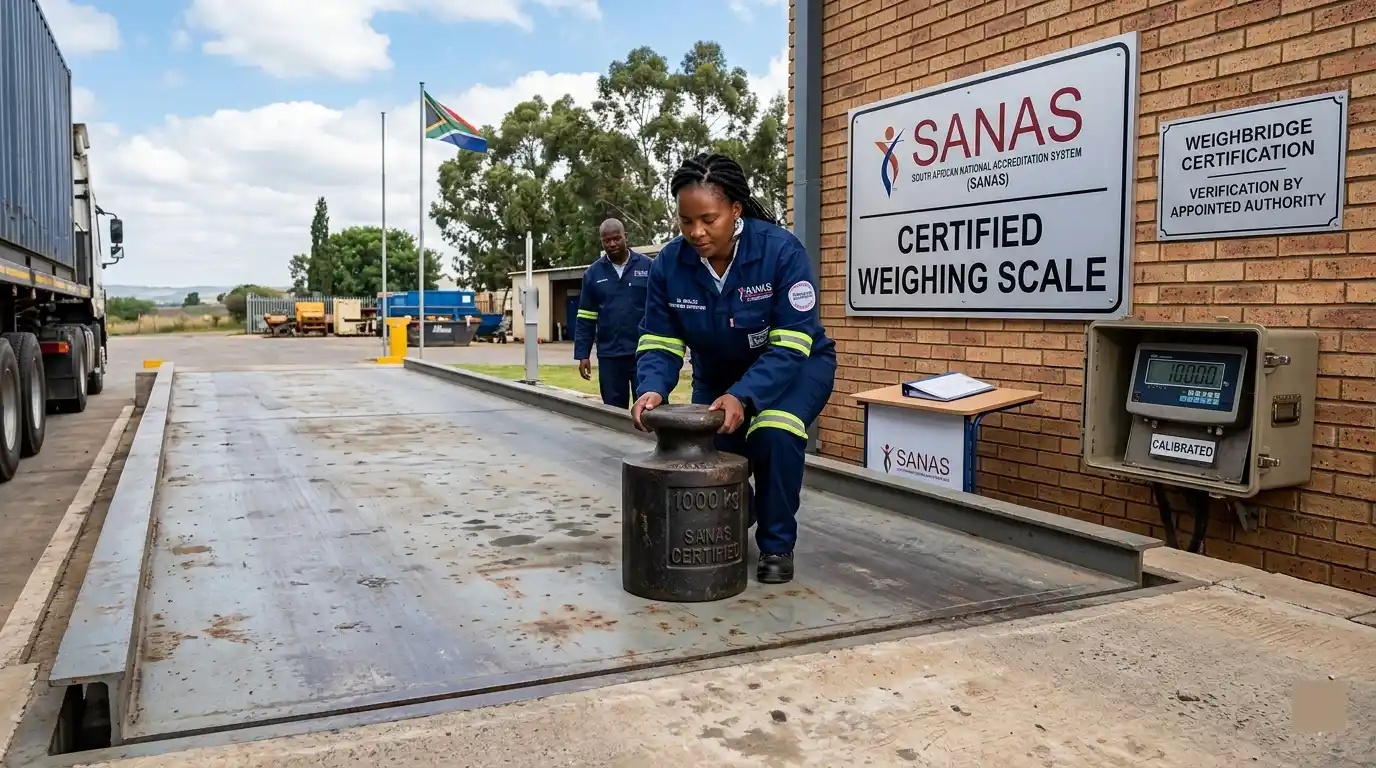
The scales are inspected to ensure they are functioning correctly and can measure weight accurately. This inspection is usually performed by a certified body or inspector. Tests are done to ensure that the scale adheres to the required standards and can handle the intended load without malfunctioning.
Certification Issuance
If the scales pass the inspection and testing phase, the certification body issues a certification. This certificate confirms that the scale meets South African standards for weight measurement.
Renewal and Ongoing Compliance
Weighing scales need to be periodically re-certified to ensure they maintain their accuracy and calibration. This may involve regular inspections and recalibration checks, especially for equipment used in high-traffic areas or in industries where precision is critical.
Certification Requirements for Different Industries
Different industries have specific needs when it comes to weighing scale certification. Here’s a breakdown of certification requirements for common sectors in South Africa:
- Healthcare: Scales used in healthcare settings, such as baby scales, bed weighing scales, and BMI scales, need certification to ensure patient safety. These scales are critical in accurately tracking medication dosages, maternal health, and child growth.
- Retail and Commercial Use: Weighing scales used in retail settings, such as for pricing goods or measuring products for sale, need certification to prevent overcharging and to comply with trade regulations.
- Industrial Weighing Scales: Weighing scales used in industries such as agriculture, manufacturing, and logistics require certification to ensure that they provide accurate measurements for bulk goods or raw materials.
The Role of Certification in Various Sectors
Weighing Scales in Healthcare
In healthcare, the role of certified weighing scales is vital for monitoring patients’ health. Medical scales are used to assess weight changes, which can indicate health deterioration or improvement. Scales like baby scales and bed weighing scales are essential for tracking child development, monitoring maternal health, and ensuring proper medication dosing.
Certified medical scales ensure that patients receive the correct amount of medication based on accurate weight measurements. For example, in the treatment of heart failure, weight changes are tracked to monitor fluid retention, which can indicate worsening conditions. Similarly, BMI scales help doctors assess obesity and manage weight-related health risks such as diabetes.
Key Considerations:
- Infant Health: Baby scales must be accurate to track infant weight gain and monitor health.
- Chronic Conditions: Bed scales and patient transfer weighing scales ensure accurate monitoring for patients who are immobile or bedridden.
Retail and Commercial Sectors
In the retail sector, certified weighing scales ensure fair trade. This is particularly important for businesses selling goods by weight, such as supermarkets, bulk goods stores, and e-commerce platforms. Certified scales help prevent errors in pricing, ensuring that customers are charged accurately for the weight of the products they purchase.
Certified scales also help businesses avoid disputes with consumers over the weight of purchased products, contributing to customer trust. In South Africa, retailers must use certified scales for accurate weight-based pricing, from fruit and vegetables to packaged goods.
Examples:
- Supermarkets: Scales used in fresh food sections, such as fruits, vegetables, and meats.
- Bulk Goods Stores: Ensuring that customers pay for the actual weight of bulk purchases like rice or grains.
Industrial and Agricultural Use
For industries such as agriculture, manufacturing, and logistics, certified scales are essential for weighing raw materials and finished products. These scales ensure that products are weighed accurately for fair pricing, shipment accuracy, and inventory management.
In agriculture, for example, certified scales are used to weigh bulk crops, ensuring that the amount being purchased or sold is accurately recorded. Similarly, in manufacturing, certified scales are used to measure the weight of raw materials or finished products to ensure consistent production standards.
Key Industries Using Certified Scales:
- Agriculture: Weighing bulk crops like grains or produce.
- Manufacturing: Measuring raw materials or components for production lines.
- Logistics: Ensuring accurate measurements for shipments and inventories.
Key Standards and Regulations for Weighing Scales in South Africa
In South Africa, the regulation of weighing scales is governed by national standards that ensure accuracy, consistency, and fairness across industries. The key organisations responsible for the certification and regulation of weighing scales include SANAS (South African National Accreditation System) and the NRCS (National Regulator for Compulsory Specifications). These organisations ensure that all scales used in commercial and healthcare applications meet the necessary standards.
SANAS and NRCS Guidelines
SANAS is responsible for accrediting organisations that verify the accuracy of measuring instruments, including weighing scales. For businesses to legally use weighing scales, they must ensure their scales are calibrated and meet the required standards. NRCS, on the other hand, enforces compulsory specifications for certain types of measuring instruments, including those used for trade purposes.
Regulatory Requirements for Weighing Scales:
- Weighing scales must conform to the Legal Metrology Act, which governs the use of measurement instruments in trade to protect consumers.
- Scales used in trade must comply with the specifications set out by OIML (International Organisation of Legal Metrology), ensuring that South Africa aligns with global standards.
- Certified scales must be regularly inspected and calibrated to maintain their accuracy.
Compliance with OIML and ISO Standards
The OIML R76 standard is particularly relevant to weighing scales as it defines the minimum specifications and performance requirements for weighing equipment. These international standards ensure that South African scales are consistent with global practices in legal metrology, which is important for businesses trading internationally.
Legal Metrology and Weighing Scale Laws
The Legal Metrology Act is the primary legal framework governing the use of measuring instruments in South Africa. This law ensures that all measuring instruments, including weighing scales, are accurate and used fairly in transactions. The Act sets out the requirements for certified scales used in retail, commercial, and healthcare applications.
Legal Requirements for Weighing Scales in Trade
According to the Legal Metrology Act, scales used in trade must be certified to ensure that they provide accurate weight readings for goods sold by weight. This applies to all industries that engage in trade based on weight, including:
- Retail: Weighing products like fruits, vegetables, meats, and packaged goods.
- Agriculture: Weighing bulk crops, grains, and livestock.
- Manufacturing and Logistics: Weighing raw materials and finished goods.
Failure to comply with these regulations can result in penalties, including fines or forced suspension of operations. For example, if a business is caught using an uncalibrated scale, it may face legal consequences under the Legal Metrology Act.
Calibration and Inspection Requirements
All certified scales must undergo regular calibration and inspection to ensure that they remain accurate. Calibration ensures that the scale’s measurement system is in alignment with national or international standards. For most businesses, this means:
- Annual Calibration: Scales must be calibrated at least once a year or after heavy use.
- Regular Inspections: Scales must be inspected by accredited bodies to verify their accuracy.
Challenges in Weighing Scale Certification
Despite the clear regulations and standards, there are several common issues that businesses face when it comes to weighing scale certification. Non-compliance with these regulations can lead to severe consequences, both for businesses and consumers.
Accuracy Concerns
One of the main issues with uncalibrated or uncertified scales is accuracy. Over time, scales can drift out of calibration, which can lead to incorrect weight readings. Inaccurate measurements may result in businesses either overcharging or undercharging customers, potentially damaging customer trust and causing legal disputes.
For example, a retail scale that consistently overweighs products could result in a business charging customers more than the correct price, leading to consumer complaints and potential legal penalties.
Outdated Calibration
Another significant issue is outdated calibration. Over time, the components of a weighing scale can wear down, especially in high-traffic or high-use settings such as retail stores or factories. Regular calibration checks are essential to ensure that the scales are still operating accurately. Failure to perform timely calibration can result in mismeasuring weights and non-compliance with legal metrology laws.
Barriers to Certification for Small Businesses
For small businesses, obtaining weighing scale certification can be a daunting task due to several factors, such as the high costs involved and the complexities of navigating the regulatory requirements.
Costs and Accessibility
The cost of obtaining a certification for weighing scales, including calibration, inspection, and the certification process itself, can be a significant financial burden for small businesses. Additionally, some businesses, particularly in remote areas, may find it challenging to access certified calibration services or inspection bodies, further complicating the process.
Lack of Awareness
Another barrier is the lack of awareness about the importance of certification. Many small businesses may not fully understand the implications of using uncertified scales, which can lead to errors in measurements, regulatory penalties, and loss of consumer trust.
To address this, businesses must invest in understanding the certification process and take the necessary steps to ensure their scales are properly calibrated and legally compliant.
The Future of Weighing Scale Certification in South Africa
As technology continues to advance, the future of weighing scale certification in South Africa is likely to see significant changes. New technologies are improving the accuracy and ease of use of weighing scales, making it easier for businesses to meet certification requirements and enhance their operations.
Smart Scales and IoT Integration
The integration of Internet of Things (IoT) and smart technologies in weighing scales is a major development in the industry. Smart scales can be calibrated remotely, monitored for performance, and even automatically send data to regulatory bodies for certification purposes. This integration makes the certification process more efficient and reduces the chances of human error in maintaining accurate weights.
Digital Certification Systems
In the future, South Africa may see a shift towards digital certification systems, where businesses can manage and update their certification status online. This system would simplify the process of obtaining and renewing certifications and allow for easier access to the required calibration data and certifications.
The Role of Artificial Intelligence in Weighing Scales
Artificial intelligence (AI) could also play a role in enhancing the accuracy of certified scales. AI could be used to predict weight trends, detect faults in weighing systems, and improve the calibration process. With AI-driven systems, businesses would be able to monitor and maintain their scales more effectively, ensuring consistent accuracy and reducing the need for manual intervention.
Final Thought
For South African businesses, understanding weighing scale certification in South Africa is not an administrative burden; it is a mandatory commercial safeguard. Proper certification shields your company from severe NRCS fines and confiscation, protects your profit by ensuring you never over-dispense product, and builds consumer trust in your trade practices.
The successful management of weighing compliance depends on two things: using Type Approved equipment and maintaining a strict schedule of Verification and calibration with a qualified partner. Do not wait for an NRCS inspector to find a broken seal or an expired certificate.
Is your scale’s certification current? Protect your business from severe NRCS fines and ensure every transaction is legally sound. Partner with South Africa’s leading authority. Contact Scales4U today for SANAS-accredited verification, expert repair, and a guaranteed path to legal compliance for all your industrial and retail weighing instruments.