
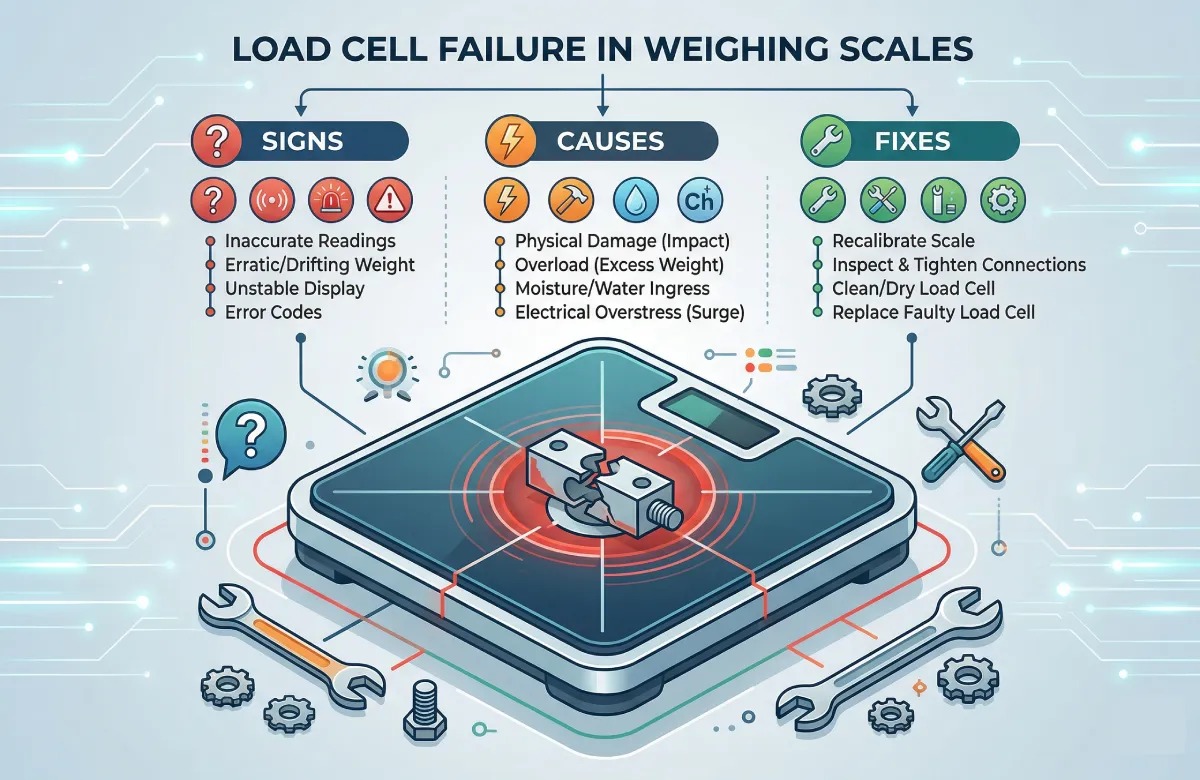
In many industrial and commercial settings, load cells play a pivotal role in ensuring accurate weight measurement. Whether it’s in manufacturing, retail, or logistics, load cells are responsible for converting force or weight into an electrical signal, allowing systems to calculate measurements with high precision. However, like any piece of equipment, load cells can face issues that cause them to fail, leading to inaccurate readings, inefficiency, and costly repairs.
Load cell failure can go unnoticed until it seriously disrupts operations. Early detection is crucial to avoid these problems. In this blog, we will explore the common signs of load cell failure, the causes behind it, and the solutions to fix these issues before they lead to bigger problems. Whether you’re dealing with a strain gauge, hydraulic, or pneumatic load cell, this guide will help you identify the signs of failure and take the necessary steps to address it.
What Is a Load Cell? And its Types
A load cell is a sensitive sensor designed to convert the force or weight exerted on it into an electrical signal. The electrical signal generated is proportional to the weight being applied, which can then be interpreted by a weighing scale or system to produce an accurate weight reading. Load cells are found in almost all weighing scales, whether they’re used for measuring food products, vehicles, or industrial equipment.
To effectively troubleshoot a malfunction, it is helpful to understand how digital scales work and how the wheatstone bridge circuit within the load cell translates physical pressure into the millivolt signals your controller reads. Load cells come in various designs and capacities to meet the needs of different industries. They are essential components in ensuring accuracy and reliability in a wide array of applications. Whether you’re using them in retail, hospitals, or manufacturing, ensuring they perform at their best is crucial for optimal functionality.
Common Types of Load Cells
Strain Gauge Load Cells
The strain gauge load cell is the most commonly used type, found in various applications due to its accuracy and versatility. It works by using a strain gauge to measure the deformation of a material when force is applied. These are typically used in general industrial applications.
Hydraulic Load Cells
Hydraulic load cells use fluid pressure to measure weight. They are especially useful for heavy-duty applications, such as weighing large containers or cranes, where high capacities are needed.
Pneumatic Load Cells
Like hydraulic load cells, pneumatic load cells measure force via air pressure. These cells are commonly used in environments where cleanliness and hygiene are important, such as in the food industry.
Capacitive Load Cells
Capacitive load cells measure changes in capacitance when a force is applied. They are highly accurate but are typically used in low-capacity applications like laboratories.
Piezoelectric Load Cells
Piezoelectric load cells generate an electrical charge when subjected to a force. They are ideal for dynamic load measurements and are often used in high-speed applications where constant readings are required.
Common Signs of Load Cell Failure
1. Inaccurate Weighing Results
One of the first signs of load cell failure is inaccurate weighing results. When the load cell is not functioning properly, it cannot provide precise measurements, leading to discrepancies in the weight readings. Inconsistent readings might result in products being weighed incorrectly, causing issues in inventory management, billing, or quality control.
2. Zero Drift
Zero drift is a common symptom of environmental stress; exploring the various reasons why digital scales give inconsistent readings, such as moisture ingress or RFI interference, can help you determine if the cell is truly broken or simply reacting to its surroundings. This is especially problematic in weighing scales that need to be highly precise, such as in pharmaceutical or laboratory applications. Zero drift often occurs due to temperature fluctuations, moisture ingress, or poor calibration.
3. Fluctuating or Erratic Readings
Load cells that are experiencing electrical interference, signal loss, or mechanical failure can produce erratic readings. These readings may fluctuate unpredictably, even when the load on the scale remains constant. This can disrupt operations and cause delays, particularly in high-traffic environments such as factories or warehouses.
4. Physical Damage
Sometimes, physical damage is the culprit behind load cell failure. This can include cracks, corrosion, or wear and tear caused by shock loading, overloading, or poor handling. Mechanical failure or misalignment often follows these signs, which can lead to permanent damage and the need for expensive repairs or replacement.
5. No Response to Force
If the load cell is not reacting properly to the applied weight, it might be malfunctioning. A load cell failure may cause it to stop responding entirely, or it could show an abnormal response to force. This issue could be linked to electrical failure, connector issues, or sensor damage.
Common Causes of Load Cell Failure
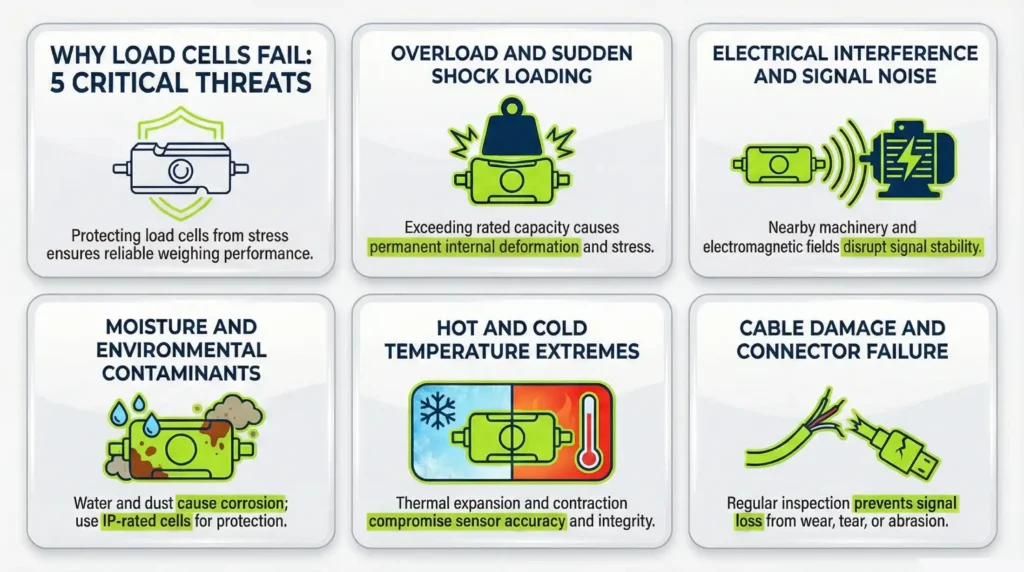
1. Overload and Shock Loading
Overloading is one of the most significant causes of load cell damage. When the weight applied exceeds the load cell’s rated capacity, it causes deformation and stress on internal components, leading to irreversible damage. Similarly, shock loading, where a sudden, high force is applied, can also result in damage to the load cell, affecting its functionality.
2. Electrical Interference and Noise
Electrical interference from nearby machinery, power lines, or even electromagnetic fields can disrupt the electrical signals sent by the load cell. This interference often results in unstable readings or complete signal loss. Ensuring proper shielding and grounding is critical in preventing these issues.
3. Moisture and Environmental Contaminants
Exposure to moisture, dust, chemicals, and other environmental contaminants can cause corrosion and damage sensitive components of the load cell. This is particularly problematic in industries like food processing, where hygiene and cleaning are essential. IP-rated load cells can help mitigate these issues by offering better protection against water ingress and dust contamination.
4. Temperature Extremes
Temperature extremes, both hot and cold, can affect the accuracy and performance of load cells. Thermal expansion or contraction can cause the internal components to lose their accuracy, while extreme cold can cause physical damage to the sensors. Load cells that operate in environments with extreme temperatures should be temperature-compensated or rated for high-temperature conditions.
5. Cable Damage and Connector Failures
Cables and connectors are the communication pathway between the load cell and the measurement system. Cable damage, whether from wear and tear, abrasion, or improper handling, can result in loss of signal or incorrect measurements. Regular inspection and maintenance of cables are necessary to ensure reliable operation.
Troubleshooting and Fixes for Load Cell Failures
1. Testing Load Cells with a Multimeter
When it comes to diagnosing load cell failure, one of the most effective tools is a multimeter. A multimeter allows technicians to measure various electrical properties of the load cell, such as resistance, voltage, and continuity, helping pinpoint potential issues in the circuitry or wiring.
Procedure:
- Use a digital multimeter to test for continuity in the wiring. Any breaks in the cables or connectors will show up as a lack of continuity.
- Check the resistance between the load cell’s output and ground. A significant deviation from the manufacturer’s specified value indicates electrical issues or component failure.
Tip: Regular multimeter load cell testing can help identify problems early, preventing further damage and improving the longevity of the system.
2. Recalibrating the Load Cell
Zero drift or inconsistent readings are often signs that a load cell needs to be recalibrated. Calibration ensures the scale reads accurately, even after environmental changes, power cycles, or mechanical stress.
Steps for Calibration:
- Step 1: Remove any load from the scale and ensure it returns to zero. If it doesn’t, it indicates zero drift.
- Step 2: Use a calibration weight (often provided by the load cell manufacturer) to apply a known weight to the scale.
- Step 3: Adjust the scale’s settings based on the difference between the measured weight and the actual weight to restore accuracy.
Tip: Regular calibration is necessary for maintaining load cell accuracy, especially in environments where temperature extremes or vibration might cause drift.
3. Replacing Damaged Components
Physical damage to a load cell, such as cracks, dents, or corrosion, may require the replacement of the load cell or certain components, such as the strain gauge or internal sensors. While some minor damage can be repaired, extensive damage typically requires the replacement of the entire load cell.
Steps for Replacing Components:
- Step 1: Inspect the load cell for visible signs of damage or wear. This includes looking for cracks in the housing or corrosion around the cables.
- Step 2: Disconnect the load cell from the weighing system, ensuring you’ve correctly noted the wiring configuration.
- Step 3: Install the new load cell or components and calibrate the system according to the manufacturer’s guidelines.
Tip: Always use OEM (Original Equipment Manufacturer) replacement parts to ensure compatibility and maintain system accuracy.
4. Protecting the Load Cell from Environmental Damage
Environmental factors, such as moisture, dust, and extreme temperatures, can cause long-term damage to load cells. Ensuring your load cell is protected from these elements is key to preserving its functionality. If your load cells are frequently failing due to washdown procedures or chemical exposure, the choice between mild steel vs stainless steel floor scales becomes critical, as stainless steel offers superior protection for the internal sensors.
Solutions:
- Use IP-rated Load Cells: Load cells with IP67 or IP68 ratings are protected against dust and moisture, making them ideal for harsh environments.
- Sealed Enclosures: For environments where water or chemical exposure is a concern, use sealed enclosures or protective coatings for added protection.
- Proper Storage: When not in use, store load cells in a dry, temperature-controlled environment to prevent exposure to moisture and temperature extremes.
Tip: If your load cells are exposed to chemical environments, ensure that you choose load cells made from corrosion-resistant materials like stainless steel.
5. Proper Mounting and Alignment
Misalignment of the load cell or improper mounting can lead to inaccurate readings and eventual mechanical failure. Ensuring that the load cell is correctly aligned and mounted is crucial for its long-term performance.
Steps for Proper Alignment:
- Step 1: Check that the load cell is securely mounted on a stable surface.
- Step 2: Ensure the weighing pan is aligned correctly and does not apply uneven force to the load cell.
- Step 3: Regularly inspect the mounting fixtures for looseness or wear.
Tip: Use alignment tools or special fixtures to ensure that the load cell is properly positioned for accurate and consistent readings.
Preventative Measures and Long-Term Maintenance
1. Routine Inspections and Preventive Maintenance
To minimise the risk of load cell failure, it is essential to implement a routine inspection and maintenance schedule. Regular checks will help catch issues before they lead to system failures.
Recommended Maintenance Activities:
- Check for physical damage to the load cell housing and cables.
- Inspect the mounting and ensure proper alignment.
- Test calibration regularly to ensure the scale’s accuracy.
Tip: Create a maintenance log for all load cell inspections, including calibration dates, performance checks, and service records. This will help you track the health of your weighing system over time.
2. Calibration and Software Updates
Routine calibration ensures that the load cell continues to operate with accuracy, even as it experiences wear and tear. Additionally, software updates ensure that the load cell’s firmware is optimized and running efficiently.
Calibration Recommendations:
- Annual calibration is typically sufficient, but high-volume operations may require quarterly checks.
- Always ensure that software updates are installed on connected systems to ensure compatibility with new features and enhanced performance.
Tip: Utilise automated calibration systems that adjust for environmental changes, such as temperature fluctuations and vibration, to keep your load cell in top condition.
3. Training for Load Cell Operators
Proper handling and usage training for operators is crucial to prevent user-induced damage to the load cell. If load cells are misused, overloaded, or subjected to incorrect calibration procedures, this can lead to premature failure.
Training Program Recommendations:
- Train staff on load cell calibration and maintenance procedures.
- Guide safe usage practices, including avoiding shock loading and ensuring proper alignment.
Tip: Consider creating a training manual or offering workshops to ensure that all employees are properly trained in load cell operation and troubleshooting.
Final Thought
Load cell failure can result from several factors, including overloading, moisture exposure, electrical interference, and improper handling. By understanding these issues and implementing regular maintenance, calibration, and training, businesses can extend the life of their load cells and improve overall performance.
If you’re experiencing load cell failure or need professional calibration and repair services, Scales4U is here to help. Our team of experts can assist you in diagnosing issues, calibrating your load cells, and ensuring your weighing systems are always performing at their best. Contact us today for a free consultation and ensure the longevity of your load cells.